3 min read
Explainer: What to know about the Senate’s new rule on results transmission
vanguardngr.com
Tuesday, February 10, 2026
The Nigerian Senate on Tuesday amended a crucial section of the Electoral Act that governs how election results are uploaded from polling units to the Independent National Electoral Commission’s (INEC) Result Viewing Portal (IREV), a move that could reshape the transparency of future elections. ...
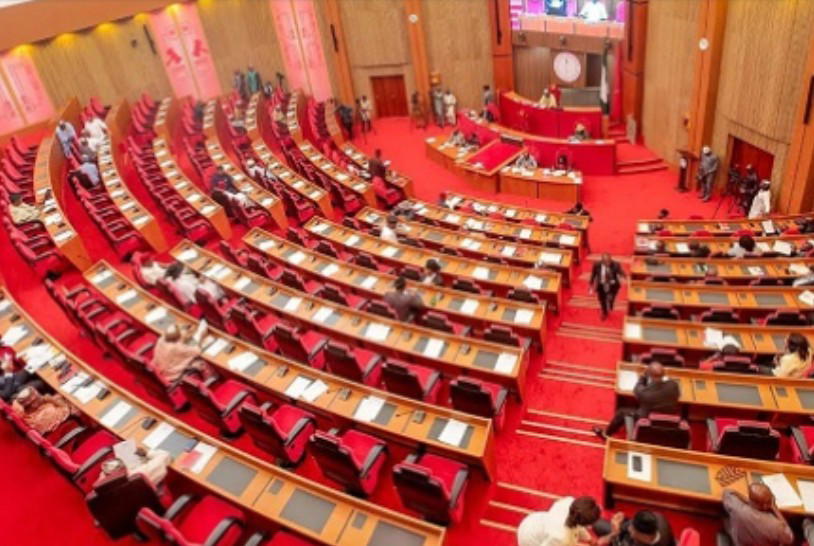
The Nigerian Senate on Tuesday amended a crucial section of the Electoral Act that governs how election results are uploaded from polling units to the Independent National Electoral Commission’s (INEC) Result Viewing Portal (IREV), a move that could reshape the transparency of future elections.
At the centre of the change is Clause 60(3) of the Electoral Act Amendment Bill, which outlines the procedure for electronic transmission of polling unit results.
Although the adjustment appears minor in wording, its implications are far-reaching.
What the law previously required
Under the existing provision, presiding officers at polling units were mandated to electronically transmit results in real time to the IREV portal once the result form (EC8A) had been signed and stamped.
In practical terms, this meant that:
- Results were to be uploaded immediately after counting.
- What voters saw at the polling unit was quickly reflected online.
- Delays that could enable manipulation were restricted.
- The real-time requirement was introduced to strengthen credibility and public trust in elections.
What the Senate has changed
In its latest amendment, the Senate removed the phrase “real time” from the clause.
The revised wording now simply directs presiding officers to electronically transmit results to the IREV portal, without fixing any time frame for when the upload must occur.
The legal effect is subtle but significant: the obligation for immediate upload has been replaced with a more flexible standard.
Why timing matters
Election transparency depends not only on whether results are uploaded but also on when they are uploaded.
Immediate transmission narrows the gap between counting and publication, limiting opportunities for interference as results move through collation centres.
Without a statutory time limit, critics argue that uploads could be delayed, leaving room for discrepancies between what voters witness at polling units and what later appears on IREV.
Recent electoral cycles have shown that delayed uploads often trigger disputes and litigation.
Arguments behind the amendment
Supporters of the Senate’s decision point to Nigeria’s uneven telecommunications infrastructure.
They argue that insisting on real-time upload in areas with weak or no network coverage could disrupt the voting process and unfairly penalise remote communities.
In their view, removing the rigid time requirement gives election officials the operational flexibility to transmit results once connectivity becomes available.
Concerns raised by critics
Opponents say the amendment weakens a key safeguard built into the Electoral Act.
They maintain that technology challenges should be solved through better logistics, not by softening the law.
To them, removing “real time” opens a window in which results could be altered before publication, undermining public confidence and exposing elections to manipulation.
What happens next?
The Senate’s version of the amendment bill will be reconciled with that of the House of Representatives before being forwarded to the President for assent.
Until that process is complete, the final framework for results transmission remains subject to change.
Why does it matter to Nigerians?
The transmission rule determines:
- How quickly polling unit results appear on IREV.
- How secure results are between counting and collation.
- How much trust citizens place in election outcomes.
- In essence, the change affects whether election transparency is immediate and verifiable or delayed and discretionary.
Bottom line
Previously, the law required results to be uploaded immediately.
Now, the Senate’s amendment requires results to be uploaded — but no longer says when.
That single deletion is what makes the new transmission rule one Nigerians will be watching closely.
The post Explainer: What to know about the Senate’s new rule on results transmission appeared first on Vanguard News.
Read the full article
Continue reading on vanguardngr.com
More from vanguardngr.com

7 minutes ago
Happiest Minds deepens AI-first transformation

7 minutes ago
Вторая ракетка мира Швентек вышла в третий круг турнира в Дохе
8 minutes ago
BRS accuses State government of allowing A.P. draw excess Krishna water
8 minutes ago