21 min read
COUP’ FULL STORY: How Nigeria’s structure encouraged divisions — Gen. Musa, Defence Minister
vanguardngr.com
Sunday, February 8, 2026
• ‘We cannot be in 2026 and still be debating Biafran coups, civil war narratives, and ethnic blame’ •ON THE ‘EXECUTION’ OF GEN UBA IN N/EAST: We are not certain he is dead. No body has been found • WARNS ON KILLINGS: Terro...
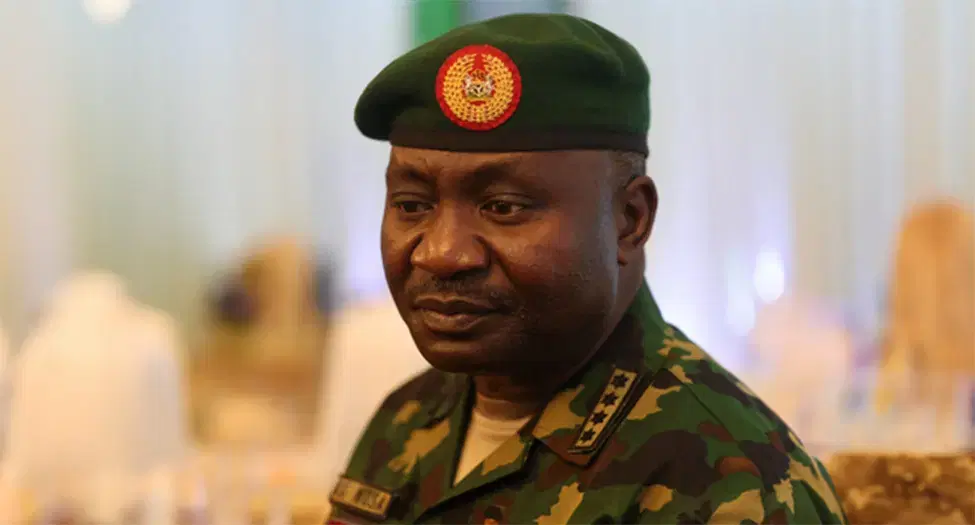
• ‘We cannot be in 2026 and still be debating Biafran coups,
civil war narratives, and ethnic blame’
•ON THE ‘EXECUTION’ OF GEN UBA IN N/EAST: We are not
certain he is dead. No body has been found
• WARNS ON KILLINGS: Terrorists will continue to try to cause pain
•ON NIGERIA’S 1,500 KILOMETRES BORDER: We are considering fencing option
By Nnamdi Ojiego
In the aftermath of Nigeria’s most serious internal security scare in recent years, Defence Minister, General Christopher Musa, says he was not only involved in dismantling the failed coup plot but was himself listed among those marked for removal. In this wide ranging conversation, he reflects on the plot, the deeper forces that fuel such ambitions, and the personal reality of serving at the heart of a country still battling insurgency, banditry, and cross border threats. While providing insight into the government’s strategic partnerships with nations like the United States, Israel, and Turkey, and how these collaborations are shaping the country’s defense capabilities and intelligence efforts, Musa speaks on speculation of replacing Vice President Kashim Shettima, in 2027 dismissing such talk as a distraction from the real challenges at hand. Excerpts:
You recently stepped away briefly after decades of continuous service in the military. What did that short break feel like?
I think I had about five weeks. In the military, there was never a time I had even two weeks away from work. For 39 years, it has been constant. So we are used to it. In fact, when you sit down doing nothing, you begin to feel something is wrong. You have to stay busy. I am grateful. I am thankful to God and to Mr President for considering me worthy of this responsibility. It is a big task, a very serious responsibility. But the love I receive from Nigerians encourages me to do more.
Your appointment as Minister of Defence was widely welcomed. Many Nigerians see you as a round peg in a round hole, even though there has also been criticism in some quarters. How smooth has the transition been from Chief of Defence Staff to Minister of Defence?
The military prepares you for both worlds. I became a brigadier general in 2018, so I have long understood that military service is temporary. Before joining the military, you are a civilian. After retirement, you return to civilian life. That mindset is important. You must prepare yourself early, not lean only on the military identity. I have done that preparation, and it has helped me adjust.
When you last met with us as Chief of Defence Staff, I asked what you wanted to be remembered for. Do you still hold the same view?
Yes. I want to be remembered as someone who gave his best to his country and helped ensure peace. That remains my focus.
Does this role feel like a continuation of your time as CDS? Or do you feel there were objectives you could not fully achieve then, which you can now pursue as Minister?
It is a continuation. As CDS, you are more military and less civilian. As Minister of Defence, you are more civilian while still deeply connected to the military. It allows you to combine both perspectives. Understanding how the military operates and how civilian governance works together is critical, and it prepares you well for this role.
Do you still see yourself as a soldier?
Always. I am very proud of that.
Do you miss the uniform?
Yes. In the military, you give orders and things move immediately. Now, you must monitor, coordinate, and follow up across different systems. It is different, but it is interesting and challenging.
So are you now a politician?
I would say I am in transition.
Are you a member of the APC?
Not yet, but I likely will be. The APC provided the platform that brought me here. Mr President needs support. Anything I can do to help him succeed, including supporting a second term, I will do my best.
Military life values precision, command, and obedience. Politics demands negotiation, patience, and compromise. How are you managing that shift?
The Armed Forces actually prepare you for that reality. You learn that you do not win every battle, and not every order is carried out immediately. You must understand your environment without compromising who you are. There is a prayer I often make: for the wisdom to change what I can, accept what I cannot, and understand the difference. That balance is important.
Some people suggest your appointment was a form of compensation by the President, particularly following the failed coup attempt. How do you respond to that?
I believe the President has an eye for talent. He saw that I could contribute in this role. I do not see it as compensation. I see it as trust. My duty is to justify that trust by serving the country faithfully.
You were directly involved in foiling that coup attempt, and reports say your own life was also in danger.
Yes. I was a target. I was supposed to be arrested, and if I resisted, I was to be shot. That is part of the job. Anyone who plans a coup understands the consequences. But frankly, the individuals involved were unserious. They underestimated Nigeria. Even without the Armed Forces, Nigerians would have resisted them. This country has fought hard against military rule. For anyone to think a coup could succeed today shows poor judgment.
Have all those involved been arrested?
Most of them have. If anyone remains, it may be one or two. The plot started with a colonel who was disgruntled after failing to meet promotion criteria. He tried to recruit others with personal grievances. My pain is for the younger officers who did not fully understand what they were being dragged into. They now face serious consequences.
Significant funds were reportedly committed to the plot…
Yes, a lot of money. But it was centred around that individual. It is difficult to imagine a colonel attempting something like this today. That era is gone.
Why did it take time for the military to detect and act on the plot?
You do not act on speculation. You act on evidence. Any action must stand in court. We monitored carefully until facts were established. I personally inaugurated the investigation board. DIA, NIA, DSS, and other agencies worked together. We were deliberate because we did not want any innocent person wrongly accused.
There are indications the planning began even before President Tinubu took office. Is it true?
That is correct. This was not a reaction to the current administration. Planning began before May 29, 2023. They knew who won the election and started scheming early.
Would it have been a violent coup?
Yes. Their plan involved removing anyone in their way. But their capacity to execute it was unrealistic. This is Nigeria, not a fragile state.
Have loopholes within the military been identified and addressed?
There is no system that is perfect. Every society has good and bad elements. Our duty is constant monitoring and discipline. Anyone attempting to undermine democracy today is acting against the will of Nigerians.
Can you confidently say a coup is now impossible in Nigeria?
The Armed Forces are united. We are vigilant. We watch for disgruntled elements, but the military stands firmly as one.
What about civilians who allegedly funded or supported the plot?
Civilians have often instigated coups in the past. It has never ended well. Democracy is non-negotiable.
Are those civilians still at large?
Yes, some of them. Interpol has been contacted. It is only a matter of time.
Some alleged names are linked to the ruling party. How do you explain that?
Greed. Some people believe power must always revolve around them. That mindset leads to consequences.
What happens to the families of those arrested?
Families often bear the pain of such actions. We have engaged them to ensure clarity. The Armed Forces are also ensuring that families are not punished for the actions of their relatives.
One suspect reportedly escaped briefly before being re-arrested. Why was there initial confusion?
It was not confusing. When investigations began, we described it as indiscipline until facts were confirmed. A coup allegation is serious. We preferred accuracy over haste.
Has the President been fully briefed?
Yes. Fully.
There are concerns about security around Aso Rock, especially given past incidents involving the Guards Brigade.
No location is completely immune. Even the White House and Buckingham Palace have had breaches. Aso Rock is heavily fortified, but incidents help us identify areas to strengthen. That process is ongoing.
Has there been a reorganisation of security since then?
Yes. That is the purpose of such reviews. You identify weaknesses and fix them.
One episode that continues to shape our politics is the Kaduna Nzeogwu-led coup, particularly its ethnic undertones and the deep distrust it created. If the failed coup of last year had succeeded, it could have taken a similar dimension. What lessons have you drawn from that history, not just for the military, but for Nigeria’s political future?
The first thing Nigerians must understand is that we all have a responsibility to remain alert to what is happening in our country. We must pay attention and hold our political leaders accountable, because many crises begin with perception. And perception can be very dangerous. A country may be doing well, yet people perceive it as failing for one reason or another. This problem did not start today. It did not even start with coups. Nigeria’s structure, from the very beginning, encouraged divisions, with everyone wanting to stand alone. But we must move beyond that. Personally, I feel pained that decades after independence, we still blame everything on colonialism. For goodness’ sake, we are over 60 years on. We should have moved far beyond that excuse.
Some argue that unresolved grievances from the Nzeogwu coup era still shape political suspicion today. In this recent failed coup, the ethnic and regional composition of those arrested has raised questions. Do you believe this was deliberate or coincidental?
I believe it was coincidental. The military operates like a family. People often work closely with those around them in their area of operation. That likely explains the composition. That said, what they did was foolish, and they will live with the consequences. You cannot attempt a coup and expect sympathy. We cannot be in 2026 and still be debating Biafran coups, civil war narratives, and ethnic blame. We should have learned the lessons. Many lives were lost on all sides. Everyone suffered. Continuing to dwell on that past will only hold us down. No nation develops amid constant internal conflict. Those complaining the loudest are often those who benefited from the old system and now feel excluded. That frustration fuels resentment. But my appeal, especially to elders, religious leaders, and traditional rulers, is this: Let us stop poisoning the minds of the younger generation with old grievances.
Across sub-Saharan Africa, coups have resurfaced, especially in recent years. Some Nigerians fear that regional instability could spill over. How confident are you that Nigeria is insulated from this trend?
First, it is important to note that most of these coups are occurring in Francophone countries, not Anglophone ones. Nigeria and Ghana remain the most stable democracies in the region. In fact, just a few weeks ago, we helped stop a coup attempt in the Benin Republic. It happened on a Sunday morning. I was on my way to church when the alert came in. By evening, the situation had been contained. Our troops are still there, but we are already drawing them down. That tells you about our capacity and readiness. It also explains why we engage countries like Turkey. We must build our own strength so we can secure Nigeria, stabilise the region, and contribute to Africa’s security.
Was that intervention in Benin at the request of their president?
Yes. It was a direct call to President Bola Tinubu. No action was taken without presidential approval. Once the directive was given, troops were mobilised. Within 12 hours, we had secured the area.
Some critics suggested Nigeria was acting on behalf of France…
Not at all. It was a sovereign request and a sovereign decision.
Let us turn to your recent visit to Turkey. What exactly did Nigeria sign in terms of defence cooperation?
We formalised our military cooperation. This includes military education, training exchanges, and joint production of defence equipment. Turkey has achieved remarkable transformation. We want to replicate aspects of that success. The agreement covers co-production of hardware, maintenance, spare parts, and training. We already operate Turkish equipment, so sustainability is critical. This is not about buying equipment and walking away. It is about building capacity.
Turkey ranks among the world’s leading defence manufacturers. What new capabilities does Nigeria gain from this partnership?
The key shift is technology transfer. We do not want perpetual dependency. We want to produce through DICON here in Nigeria. That means jobs, reduced foreign exchange spending, and the ability to support other African countries. Turkey is willing to transfer technology, which many countries refuse to do. We have the capacity to adapt and localise what we receive. Turkey fought insurgency for over 40 years. We have been fighting ours for 17. We do not want to wait that long. Producing our own equipment is critical to ending this conflict faster. Our troops are active across the country. We are engaging terrorists daily. Just recently, several commanders were neutralised. This is a process, but progress is real. Public support has improved, and that matters. When Nigeria fails, everyone fails. Praying for Nigeria’s collapse is self-defeating.
Beyond hardware, does the agreement include intelligence sharing?
Yes. Turkey has a strong intelligence system, positioned between Europe and Asia. They can help us track funding, logistics, command structures, and external support networks.
Nigeria’s satellite surveillance capacity has limitations. How does this affect response time?
We have satellite capability, but it is not real-time. It can take days. Modern warfare requires instant intelligence. This conflict is difficult because the enemy blends into civilian populations. Precision is essential to avoid civilian casualties, and precision is expensive. Infrastructure is another challenge. In some areas, covering 10 kilometres can take six hours because roads are poor and routes must be cleared for IEDs. One mistake can wipe out an entire vehicle. Many recent attacks happen because terrorists are fleeing pressure.
As they retreat, they strike villages to show they still exist. That creates headlines and the impression that nothing is changing, but the reality is different.
How soon will Nigerians see Turkish technology deployed?
Very soon. Some assets are already in process. Training and documentation are ongoing, and deployment will follow quickly.
What about integration, given Nigeria operates American, Russian, Chinese, and Turkish systems?
They are interoperable. We conduct specific training for each system. We already operate Turkish helicopters successfully, with trained pilots and maintenance crews. Procurement is customised to our terrain. Alongside equipment, we secure spares, training, and maintenance systems so deployment is seamless.
Does this include night vision and surveillance infrastructure?
Yes. It is comprehensive.
So the systems can communicate with one another?
Yes, fully. That eases operational pressure.
Does this affect Nigeria’s relationship with the United States?
Nigeria is non-aligned. We partner with any friendly nation. We work with the US, China, Turkey, and others. Isolation is not strategic. Egypt does the same. That flexibility strengthens us.
On border security, are we investing in technology to secure land borders, not just airports and seaports?
Yes. That is why coordination between Defence, Interior, and Foreign Affairs is essential. Data and technology allow us to track movement in and out of the country. Turkey has shown what is possible, combining physical barriers with technology. We are assessing where fencing makes sense and where technology is more effective.
So physical fencing is an option?
Yes, in critical areas. It reduces manpower pressure and allows quicker response using cameras, drones, and patrols.
Are we already receiving border-control support?
Yes. It is part of the broader plan. That is why I visited the Minister of Interior.
How soon is that happening?
It is a work in progress. It takes a lot of infrastructure to manage. As we mentioned earlier, we have about 1,500 kilometres of border, with the most critical being Niger Republic. We also have about 1,600 kilometres with Cameroon, some of which is riverine because of the maritime environment. Different countries have adopted systems that suit their terrain, and they are working for them. We already have people studying and implementing these models. Israel has some. China too. We will look at them holistically and decide what works best for Nigeria. It is very important that we control our borders. But again, data is key. A solid database is central to everything we are doing.
Do we even have a command-and-control centre?
Yes, we do. The Minister of Interior has some. Regionally, we have command centres, and I believe there is one at the centre, probably in Abuja, that allows for cross-checking and coordination. What we need, however, is a more holistic and integrated system.
Let me come to the reality on the ground. You said some commanders of terrorist and bandit groups have been neutralised. Who are these people, and where were they killed?
Mostly in the North-West, North-East and North-Central. There is an ongoing war. We are expanding operations in Niger State and Kwara State to prevent them from infiltrating towards the South, which would be very dangerous. They understand the pressure on them. What they do now is look for soft targets, strike quickly, burn a few buildings, and escape. Once the news breaks, it gives the impression that nothing is being done. But we are winning. I can tell you this sincerely. For the first time in December, people came from abroad to the South-East, stayed through Christmas, and did not rush back until January. That had not happened in the past. We are working. It is not yet Uhuru. These people will continue to try to cause pain. No country is 100 percent safe. But we are working, we are winning, and we will continue to work harder.
Yet we still see reports of attacks. One person killed, a church and police station burnt in Niger State, and about 160 people kidnapped in Kaduna. If we are winning, how are these attacks still happening?
No country, not even the United States, can claim to be completely safe. Despite all the technology, someone can still take a gun into a school. Some countries have fought insurgencies for 20 years. Turkey fought for about 40 years. Asymmetric warfare is very difficult. You are dealing with people driven by ideology, with little or nothing to lose. It is painstaking and requires patience. In the past, attacks were everywhere. Now they are limited to fewer areas. Because of the pressure, they run. When they find an open community, they strike and disappear. When the news comes out, it looks as if nothing has been done. But a lot has been done. We are also bound by human rights obligations. There are things we cannot do. If we wanted to flatten entire villages, this fight against terrorism would not have lasted this long. But we cannot. When we act, some NGOs accuse us of human rights violations. My question to them is simple. Are you not happy we are winning the war? Do you want it to drag on forever? Nigerians must understand that we are the ones who must secure our country.
Are we getting help from mercenaries or war contractors?
No. We do not have mercenaries on the ground. What we do is partner with friendly nations to enhance capacity. We train in special warfare, helicopter operations, drone usage, and other areas because we do not manufacture all these things. That is international practice. Nigeria has done this for others. We intervened in Benin, Liberia, Sierra Leone, Congo, Somalia, and elsewhere. This is part of military tradition.
The President promised more boots on the ground and recently directed the military and police to recruit more personnel. Has that process started?
Yes, it has. For the Army, aside from the depot in Zaria, which is the oldest, we have opened two new training depots, including one in the South East, to increase manpower. The Police are also expanding their recruitment and training capacity. This process must be thorough. You need to assess who you are bringing in. That again brings us back to the importance of a proper database. Security is both kinetic and non-kinetic. The military handles the kinetic aspect. The non-kinetic aspect can accelerate progress. With proper border control, good infrastructure, roads, electricity, water, and good governance, people will be more productive and secure. Crime is local. If local governments are functional, they can identify criminals within their communities. Leaving everything to the Federal Government makes it cumbersome. State governments must empower local governments to hold regular security meetings and report what is happening. We have also identified motor parks as major channels for moving weapons and drugs. We must identify official parks and shut down unofficial ones that criminals exploit. Security is everyone’s responsibility.
Israeli Prime Minister Benjamin Netanyahu has said Israel is willing to help wipe out terrorists, especially those targeting Christians. Is Nigeria talking to Israel?
Israel is our partner. We have an embassy there, and they have one here. We are talking to everyone who can add value to what we are doing.
Some believe the violence is becoming political, with sudden spikes in attacks. Have you identified a political dimension, including those funding it?
The NIA and DSS are working on that. I must appeal to leaders, especially traditional and religious leaders. Words are powerful. Certain statements can inflame tensions. We must speak to unite Nigeria, not divide it. If people have been in leadership since independence and things are not improving, then something needs to change. Doing the same thing repeatedly without results means a new approach is needed.
Ideologically, have you noticed new trends among insurgents? Are these foreign infiltrators or local initiatives?
Terrorism in Nigeria started in the North-East. We had earlier incidents like Maitatsine, which were crushed. The problem is that early warnings were ignored. Reports were written, but no action was taken. These things grow when ignored. We downplay them until they become monsters. And monsters do not attack only your enemies. They come back to attack everyone. This has happened repeatedly. That is why we must unite and confront anyone who does not mean well for Nigeria.
Why has it been difficult to name and prosecute terror financiers?
Some names have been mentioned. Arrests have been made. Prosecutions are ongoing. It takes time to gather solid evidence. You do not want to take someone to court and have the case thrown out for lack of facts. We are also working with international bodies to trace funding sources.
The reported execution of General Uba shocked many Nigerians. Is the military angry enough to go after those responsible?
Very much so. As we speak, troops are operating within the Timbuktu Triangle. We are not certain he is dead. No body has been found. He is currently classified as missing in action, not killed in action. We believe he may still be alive. There are rumours suggesting this, and we remain hopeful. I have visited his family to reassure them. This is why we must never allow criminality to fester, whether under religion, tribe, or ethnicity. Unity is critical.
Have we overwhelmed the Timbuktu area?
Troops are moving in daily. The area is vast. When pressure increases, they often flee across borders.
What is Turkey getting from Nigeria in this partnership?
We are paying. Beyond that, there is diplomatic friendship. It gives us leverage. In international forums, Nigeria and Turkey often align. Outside the military aspect, we have over 1,000 Nigerian students in Turkey. I met many of them in Ankara and Istanbul. These exchanges are beneficial to both countries.
Finally, on a political note, there are speculations about you as a possible vice-presidential candidate. How do you feel about that?
I think it is distracting. The President brought me here to ensure that our forces and security agencies restore peace in Nigeria. That is my focus. Anything else is for Mr. President to decide.
So you are not interested in being Vice President?
I have a task before me, and I want to face it squarely. I do not want to be distracted.
• Interview first aired on Channels TV
The post COUP’ FULL STORY: How Nigeria’s structure encouraged divisions — Gen. Musa, Defence Minister appeared first on Vanguard News.
Read the full article
Continue reading on vanguardngr.com
More from vanguardngr.com

6 minutes ago
2 पत्नियां-4 बच्चे, यूट्यूबर का डेढ़ साल से चल रहा अफेयर? भड़की पत्नी फिर...
6 minutes ago
रूस हॉस्टल हमला: नव-नाजी विचारधारा से प्रेरित था हमलावर! खून से बनाया स्वास्तिक का निशान
6 minutes ago
कौन थी जेफ्री एपस्टीन की गर्लफ्रेंड, जो उसके गंदे कामों में इस तरह करती थी मदद
6 minutes ago