6 min read
5 Android phones considered better than Google Pixel 10
vanguardngr.com
Thursday, February 5, 2026
Google’s Pixel 10 may be the phone Android fans associate most closely with Google’s vision of the platform, but when it comes to sheer performance, it’s no longer the device to beat. Even before accounting for Apple’s iPhone 17 Pro Max, the Pixel 10 struggles to keep pace with rival Android flag...
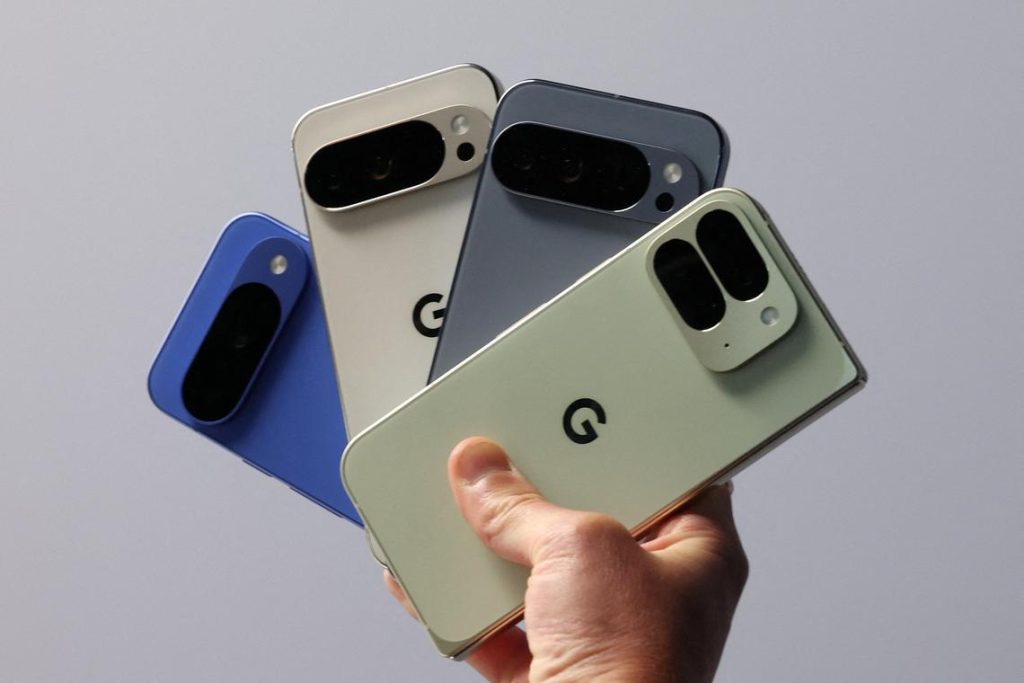
Google’s Pixel 10 may be the phone Android fans associate most closely with Google’s vision of the platform, but when it comes to sheer performance, it’s no longer the device to beat. Even before accounting for Apple’s iPhone 17 Pro Max, the Pixel 10 struggles to keep pace with rival Android flagships built around more aggressive hardware.
At the heart of the issue is Google’s Tensor G5 processor. While Tensor chips excel at on-device AI tasks, they have consistently lagged behind Qualcomm’s top-tier silicon in areas like sustained CPU performance, graphics power, and thermal efficiency. By the time the Pixel 10 launched in August last year, it was already trailing phones released months earlier—and the gap has only widened heading into early 2026.
Below are five Android smartphones that deliver clearly superior performance to the Pixel 10. This comparison focuses strictly on power-related hardware—processor strength, RAM capacity, display capability, battery technology, and thermal performance—without factoring in price or software preferences.
If raw speed, gaming, multitasking, and next-gen hardware matter more to you than Google’s AI-first approach, these phones deserve serious consideration.
Samsung Galaxy S25
Samsung’s Galaxy S25 lineup debuted at the beginning of 2025, roughly six months before the Pixel 10 arrived. Despite that head start, it still outclasses Google’s flagship in terms of performance.
Every model in the Galaxy S25 family—from the standard version to the S25 Ultra—runs on the Qualcomm Snapdragon 8 Elite, widely regarded as the most powerful smartphone processor of 2025. Benchmark testing published by Android Central shows the Snapdragon 8 Elite outperforming the Tensor G5 across nearly all categories, with the Pixel 10 holding an advantage only in AI-focused workloads.
That result isn’t surprising. Google designed Tensor G5 with machine learning and AI acceleration as priorities, often at the expense of graphics and sustained performance. For gaming, heavy multitasking, and demanding productivity workflows, the Galaxy S25 is simply the stronger device.
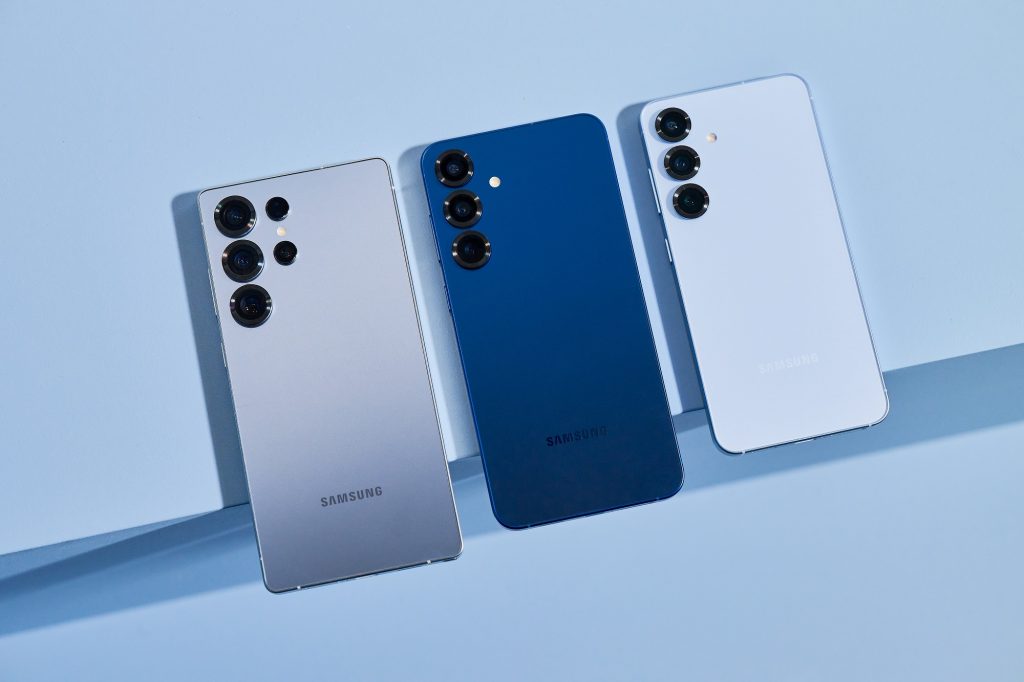
Both phones ship with 12 GB of RAM, making chipset performance the key differentiator. While the Pixel 10 Pro offers a 16 GB option, even Samsung’s Ultra model remains capped at 12 GB—an unusual limitation that could matter for users who rely heavily on memory-intensive apps.
OnePlus 15
From this point on, the competition becomes less subtle. The remaining phones on this list are powered by Qualcomm’s Snapdragon 8 Gen 5, the successor to the already-dominant Snapdragon 8 Elite—and a chip that pushes the Pixel 10 even further behind.
The OnePlus 15 represents how far the brand has evolved from its “flagship killer” roots. Today, OnePlus builds full-fledged premium phones that compete directly with Samsung, Apple, and Xiaomi on performance alone.
The OnePlus 15 can be configured with up to 16 GB of RAM, matching the Pixel 10 Pro and exceeding the base Pixel 10’s 12 GB. But the real separation comes elsewhere.

Its massive 7,300 mAh silicon-carbon battery dwarfs the Pixel 10’s 4,870 mAh lithium-ion cell. Silicon-carbon technology allows for higher energy density, and Chinese manufacturers have embraced it far faster than Google. The result is significantly better endurance without increasing size or weight.
Display specs also favour OnePlus. The OnePlus 15 features a high-end AMOLED panel with HDR10+, a 2,772 × 1,272 resolution, and a blazing-fast 165 Hz refresh rate. The Pixel 10’s OLED screen tops out at 120 Hz and a lower resolution, though it does counter with superior peak brightness at 3,000 nits compared to OnePlus’s 1,800 nits.
Xiaomi 17 Pro Max
The Xiaomi 17 Pro Max turned heads when it launched late last year—and not just because of its striking resemblance to Apple’s iPhone 17 Pro Max. Under the hood, it delivers hardware that comfortably surpasses Google’s Pixel 10.
Powered by the Snapdragon 8 Gen 5 and available with up to 16 GB of RAM, the 17 Pro Max immediately establishes a performance lead. Its triple 50 MP camera system also outmuscles the Pixel’s mixed-sensor setup, which relies on lower-resolution ultra-wide and telephoto lenses.
Battery technology is another decisive win. Xiaomi equips the 17 Pro Max with a huge 7,500 mAh silicon-carbon battery, making the Pixel 10’s sub-5,000 mAh cell feel outdated in comparison.
Xiaomi’s boldest move, however, is its secondary 2.9-inch AMOLED display integrated into the rear camera module. This screen can act as a selfie viewfinder, show notifications, display widgets, or even host animated companions. Whether it’s a must-have feature or a novelty, it’s a capability the Pixel 10 simply doesn’t offer.
Honor Magic8 Pro
Outside the U.S., competition among Android flagships is relentless—and the Honor Magic8 Pro is a prime example of how brands differentiate even when using the same top-tier chipset.
Released in October 2025, the Magic8 Pro pairs the Snapdragon 8 Gen 5 with up to 16 GB of RAM, easily outperforming the Pixel 10 Pro XL in benchmark tests published by Phone Arena. But where it really stands out is the display and charging technology.
Its 6.71-inch LTPO OLED panel supports a 120 Hz refresh rate, Dolby Vision, and HDR Vivid. The headline feature, though, is its staggering 6,000-nit peak brightness—double that of the Pixel 10. High PWM dimming helps mitigate eye strain, especially at lower brightness levels.
Battery capacity is equally impressive. The global variant includes a 7,100 mAh battery with 100W fast charging, while the Chinese model pushes that to 7,200 mAh and 120W charging. Against the Pixel 10’s 30W charging speed, the difference is dramatic.
Honor’s camera hardware also impressed during hands-on testing at CES 2026, where its 200 MP telephoto and 50 MP main sensor delivered standout results in real-world shooting conditions.
RedMagic 11 Pro
If you think modern smartphones have reached the limits of performance, the RedMagic 11 Pro proves otherwise.
Built by Nubia, a ZTE subsidiary known for gaming hardware, the RedMagic 11 Pro is the world’s first liquid-cooled smartphone. This advanced cooling system allows the Snapdragon 8 Gen 5 to sustain higher performance levels without throttling—something traditional cooling solutions struggle to achieve.
The results are undeniable. Linus Tech Tips crowned it the fastest smartphone they’ve ever tested, outperforming both the Galaxy S25 Ultra and OnePlus 15 in single- and multi-core benchmarks. GSMArena testing showed it scoring nearly four times higher than the Pixel 10 in certain performance metrics.
Beyond raw CPU power, the RedMagic 11 Pro can be configured with up to 24 GB of RAM—double the Pixel 10’s maximum. It features a 144 Hz AMOLED display, faster USB-C speeds, a headphone jack, and a massive 7,500 mAh silicon-carbon battery.
Despite all that, it still undercuts many premium flagships on price, coming in just under $1,000, compared to the Pixel 10’s $900 top-tier configuration.
The post 5 Android phones considered better than Google Pixel 10 appeared first on Vanguard News.
Read the full article
Continue reading on vanguardngr.com


