6 min read
Inside Nigeria’s battle to save children living with cancer
vanguardngr.com
Wednesday, February 4, 2026
I have turned to international beggar — Callistus; You don’t negotiate with cancer — Ajayi;I wished I would die there — Chukwu; Cancer does not define your future — Dr. Nwobbi By Chioma Obinna Each year, around 400,000 children worldwide are diagnosed with cancer. In Nigeria, roughly 7 perc...
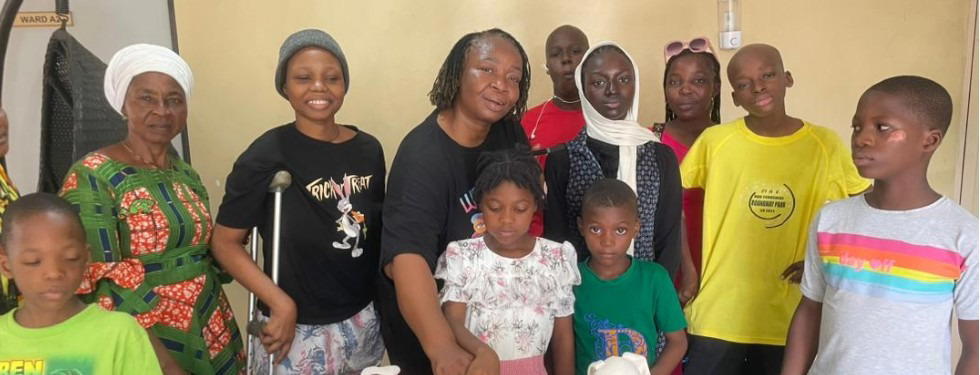
I have turned to international beggar — Callistus; You don’t negotiate with cancer — Ajayi;
I wished I would die there — Chukwu; Cancer does not define your future — Dr. Nwobbi
By Chioma Obinna
Each year, around 400,000 children worldwide are diagnosed with cancer. In Nigeria, roughly 7 percent of the country’s 127,000 annual cancer cases are in children, many of whom face delayed diagnosis and limited access to treatment.
As Nigeria joins the rest of the world to mark this year’s World Cancer Day on February 4, families at the Alima Attah Cancer Centre, Lagos University Teaching Hospital (LUTH), Idiaraba, Lagos, are quietly fighting to change the odds of survival for the better — one meeting, one child, one circle at a time. Good Health Weekly reports:
Every month, inside the Alima Attah Cancer Centre at the Lagos University Teaching Hospital (LUTH), a circle forms. Parents sit shoulder to shoulder with their children, some barely five years old, others brushing adulthood at 18. Some heads are shaved from chemotherapy. Some faces show the toll of treatment. All carry stories heavy enough to bend the room.
This is not a clinic appointment. It is a support group — a rare space where families living with childhood cancer gather to talk, cry, laugh and survive together.
Here, economies have collapsed. Careers have paused. Childhoods have been interrupted. Yet, amid the hardship, hope still finds a seat.
These parents took turns to narrate their stories while others cheered.
I have turned international beggar
— Mrs. Sara Callistus
Her daughter’s journey began in Port Harcourt, with confusion, multiple referrals and months of inconclusive tests. When medical professionals finally uttered the word “cancer,” Mrs. Sara Callistus’ world changed.
“When they said cancer, my husband almost passed out,” she recalled. I was the one encouraging him, telling him to be strong for himself and for our child.”
She had never imagined children could have cancer.
“I used to hear about breast cancer. I never knew children had cancer. This was my first time hearing it.”
Arriving LUTH offered clarity and another shock. She realised her child was not alone.
“I thought my child was the only one with cancer, but when I came here, I saw many children,” she said quietly.
The emotional burden was quickly matched by the financial one. Chemotherapy sessions alone can cost hundreds of thousands of naira — an amount far beyond what her family can sustain.
“Last week alone, we spent over N500,000 just for chemotherapy. Once we finish one week, I start begging again for the next.”
Her voice dropped.
“We have exhausted everything we have. I am begging friends and everyone I know. I have turned into an international beggar. I know everything will end in peace. But it has not been easy.”
However, every parent at the meeting has their peculiar stories.
You don’t negotiate with cancer — Mrs. Fola Ajayi
For Mrs. Fola Ajayi, cancer crept in silently. Her son showed no obvious signs of illness, no fever, no pain, a healthy appetite, the only sign was a swelling on his neck.
Doctors initially described it as an enlarged lymph node. Tests were inconclusive. Weeks passed. The swelling spread from the neck to the armpits, then to the groin and eventually to his face.
“It was not painful. That was the confusing part. Before I knew it, I couldn’t recognise my own child again,” she said.
At the Alima Attah Cancer Centre, clarity finally came. One of the doctors, “Professor Temiye, looked at the reports and said, ‘Madam, do you know what is wrong with your son? It is cancer.’”
The warning was immediate and terrifying.
“He told us, ‘If you take this boy home, by next week you will not recognise him again.”
Treatment began at once. Slowly, remarkably, the swelling began to shrink.
“The neck that looked like it would never go in — everything started reducing.I am so grateful.
But relief was tempered by reality.
“Cancer does not affect only the child. It affects the whole family. Everything shuts down. You don’t negotiate with cancer,” she said.
Another mother, a widow, took over the narration.
I wished to die there
— Chika Chukwu
Chika lost her husband three years ago, and when her son fell ill, she thought it was malaria.
“He came back from school coughing. I took him to a hospital. The doctor said it was malaria and low blood.”
Chika treated what she thought was malaria. Little did she know what fate held in store for her family. Then she noticed a small growth. When tests failed to explain it, doctors referred them to LUTH.
“When the doctor said lymphoma, I asked, ‘What is that?’ Then he said, ‘It is cancer. I froze. I could not move my legs. I wished I would die there,” she said.
After weeks of delays and waiting for test results, treatment finally began.
“So far, the treatment has been wonderful, and we are hopeful,” she said softly.
Her hope echoes through the room and reflects the reason the support group exists.
Circle that holds hope
Holding this fragile but determined community together is the Children Living With Cancer Foundation, (CLWCF) founded nearly 23 years ago by Dr Nneka Nwobbi.
“We are not a wealthy foundation. But we are committed to creating awareness, togetherness, and hope,” Nwobbi explained to the members of the support group.
The monthly meetings are not only about sharing pain; they are about celebrating life – birthdays, anniversaries, remission milestones.
“We celebrate victories, no matter how small,” she said.
She often reminds families of survivors like Chidera, who was diagnosed at 12 and is now 26. Today, Chidera, fondly called Dera, is a Nail Technician.
“There are no limits to ambition. Cancer does not define your future,” Nwobbi told the children.
She stressed the need for good nutrition, exercise, family support and the power of community. She emphasised the need for people to eat natural foods.
“Once a child has cancer, the whole family has cancer. That is why this circle matters,” she said.
She said the emotional, social and economic toll on the Nigerian child and the family can only be imagined.
“The emotional trauma, the financial burden and stress, the breaking of homes, the pain of treatment, the poverty, the sleepless nights, the worry about the home front while in the hospital with the sick child, the fear of death, the list goes on, there is need for wealthy Nigerians and government to help in the treatments of children.
She lamented that a diagnosis often results in loss of income as caregivers stop working, increased debt, emotional distress, anxiety, and depression.
She encouraged parents and other caregivers to monitor their mental health and health in general as cancer treatment remains a journey as unfortunately, “children are rarely integrated into cancer care, despite its importance.”.
As the two – hour meeting draws to a close, parents exchange phone numbers, words of encouragement and quiet prayers. However, the circle breaks but the bond remains.
Good Health Weekly can authoritatively report that until the next meeting, these parents returned to their daily battles with one shared belief that no family should fight childhood cancer alone.
The post Inside Nigeria’s battle to save children living with cancer appeared first on Vanguard News.
Read the full article
Continue reading on vanguardngr.com
