5 min read
“I Remain Loyal”: Nigeria’s Anthem of Political Survival (1), by Usman Sarki
vanguardngr.com
Wednesday, February 4, 2026
“Warnings are vain, the printed word is futile, experience teaches no lessons”“- Douglas Reed There are certain phrases that never die in Nigerian politics. They reappear like clockwork at critical moments, uttered with solemnity and flourish, yet met with skepticism by the public. Chie...
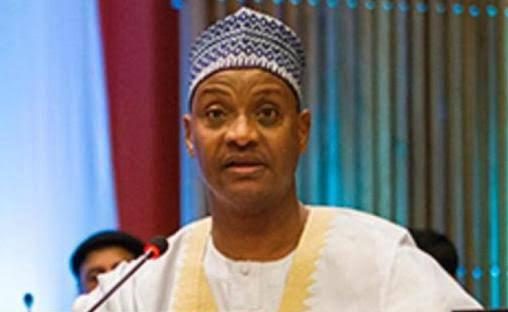
“Warnings are vain, the printed word is futile, experience teaches no lessons”“- Douglas Reed
There are certain phrases that never die in Nigerian politics. They reappear like clockwork at critical moments, uttered with solemnity and flourish, yet met with skepticism by the public. Chief among them is the oft-repeated line: “I remain loyal.” It is spoken after court defeats, whispered in party caucuses, and declared boldly in thanksgiving speeches. To the uninitiated, it sounds like a noble pledge. To Nigerians, it has become a tired chorus — an anthem of political survival.
In political theory, loyalty is supposed to signal fidelity to principles. A loyal politician remains committed to democratic norms, the party, the Constitution, and the interests of the people. But in Nigeria, loyalty has been debased and hollowed out of its meaning and redefined as a transactional currency. Here, loyalty is not to institutions or ideals but to individuals and patrons.
This explains why “loyalty” in our politics is always directed upward — toward a godfather, a party leader, or a sitting president — and rarely downward toward the voters. When a politician says “I remain loyal,” he is usually not speaking to the public. He is sending a signal to the power brokers: “I am still available, please don’t forget me when the rewards are being shared.”
The declaration often comes after a political loss. A governor stripped of office by the courts quickly pledges loyalty to the party leadership, hoping for a compensatory appointment. A senator who loses his seat assures his leader that he remains loyal, knowing that today’s loser may be tomorrow’s appointee. Loyalty here is less about conviction than calculation.
This language of survival has become so normalised that Nigerians now take it for granted. They know that loyalty is rarely absolute; it is conditional. It depends on the possibility of future benefits. And when those benefits dry up, loyalty migrates elsewhere.
This is why defections are such a staple of Nigerian politics. Politicians move across party lines with ease, carrying their loyalty like a briefcase that can be opened in any political camp. Yesterday’s sworn enemy becomes today’s “brother,” and declarations of loyalty are recycled with astonishing speed.
Such shifts expose the emptiness of political ideology in Nigeria. Since parties are not anchored in distinct visions of society, loyalty to them is not ideological but opportunistic. This portability of allegiance has made loyalty a tool of convenience rather than a binding commitment.
Ordinary Nigerians have long seen through this charade. They know that when politicians say “I remain loyal,” what they really mean is “I remain hungry for power.” Citizens now view such declarations with cynicism, sometimes even with humour. The phrase has become a national punchline — quoted on social media, parodied in cartoons, and received with wry smiles whenever it resurfaces.
But beneath the laughter lies frustration. Nigerians recognise that a politics built on such hollow loyalty cannot deliver real progress. If loyalty is only to patrons and not to the people, then governance becomes about appeasing benefactors rather than serving citizens.
This cynical use or abuse of loyalty has profound consequences for Nigeria’s democratic development. When loyalty is directed at personalities rather than institutions, accountability collapses. Politicians serve those who can advance their careers, not those who elected them. Political parties lose coherence because members defect at will, undermining stability. Institutions are weakened because they exist at the mercy of the powerful individuals who command allegiance.
In this environment, politics becomes a cynical game, where the rules are written not by principles but by expediency. And the citizens, forced to watch this game, lose faith in democracy itself.
Yet loyalty need not be doomed to cynicism. It can be reclaimed, redefined and redirected. Imagine if politicians pledged loyalty not just to leaders but to the constitution that binds us all. Imagine if loyalty were measured by consistency in defending the rule of law, standing by the truth, and protecting the rights of citizens. That would be loyalty in its truest sense — fidelity not to individuals but to principles that outlast them.
This, of course, is easier said than done. Our political culture has been shaped over decades by the patron-client system. But every system can be changed, especially when citizens demand it. The people, weary of hollow declarations, must begin to insist on higher standards of loyalty. They must hold leaders accountable not for the loyalty they proclaim but for the loyalty they demonstrate in action.
For now, however, “I remain loyal” will continue to echo in Nigeria’s political theatre. It will be solemnly uttered, dutifully reported, and skeptically received. It will remain the anthem of political survivors — a phrase that reveals less about faith and more about strategy. And so, the next time a politician proclaims those familiar words, Nigerians will smile knowingly, translate them instantly, and ask the only questions that matter: Loyal to whom? For what? And for how long?
The post “I Remain Loyal”: Nigeria’s Anthem of Political Survival (1), by Usman Sarki appeared first on Vanguard News.
Read the full article
Continue reading on vanguardngr.com
More from vanguardngr.com

32 minutes ago
AMD outlines path to >60% annual data center growth and multi-billion AI revenue by 2027 as MI400 and Helios launch
32 minutes ago
Mondelez signals chocolate margin recovery in 2027 amid shifting cocoa costs and increased brand investment
32 minutes ago
Match Group outlines flat 2026 revenue with $1.085B-$1.135B free cash flow target as Tinder turnaround advances

32 minutes ago