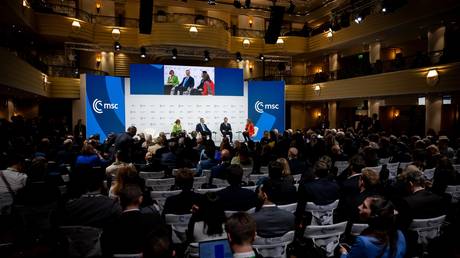
‘Contacts to Americans’ secured AfD place at Munich Security Conference – media
rt.com
Tuesday, February 3, 2026
2 min read
Share:
The event’s organizers were allegedly impressed by the party’s ties to the US administration, an AfD member has claimed
Alternative for Germany (AfD) had to use “pressure,” including by mentioning its contacts with the US administratio...
The event’s organizers were allegedly impressed by the party’s ties to the US administration, an AfD member has claimed
Alternative for Germany (AfD) had to use “pressure,” including by mentioning its contacts with the US administration, to get an invitation to this year’s Munich Security Conference (MSC), one of its members has told Politico.
The party, known for its anti-migrant rhetoric and calls for Berlin to stop sending military aid to Ukraine, has been barred from attending the event for three years, as the conference’s former chair branded it “a right-wing extremist” organization. The policy was reversed in December under interim head Wolfgang Ischinger.
According to Heinrich Koch, one of the three AfD MPs who received invitations, the party only managed to secure them “because we made an impression with our contacts to the Americans.”
The US administration criticized the so-called ‘firewall against the far-right’ policy used by mainstream German parties to prevent AfD from making it into government, despite its rapidly growing popularity. Last year, US Vice President J.D. Vance said during his speech at the conference that “there is no room for firewalls.”
Koch claimed he told the MSC representatives they could simply go to the conference this year as guests of the US delegation.
The MSC itself denied that threats involving the US made it change its mind. Ischinger told Politico that the organizers had to decide “on our own conscience” to “reflect the current reality.”
“It would be very difficult for the Munich Security Conference… to justify categorically excluding the largest German opposition party,” he said, adding that it was “the right thing” to do.
The party has faced increasing scrutiny from the authorities. In May 2025, the German domestic security service (BfV) classified it as an ‘extremist’ organization, which allows police to closely monitor the party’s activities.
The AfD still remained the most popular opposition party throughout 2025 following the February elections, where it got 20% of the vote, taking second place to Chancellor Friedrich Merz’s CDU/CSU bloc. Its popularity has since grown, with the latest polls suggesting it is supported by around 25% of Germans, on par with the CDU/CSU.