7 min read
Businesses buckle under debt as defaults push bad loans to N21.2trn
vanguardngr.com
Monday, February 2, 2026
…High interest rates, FX shocks, end of COVID forbearance trigger spike in corporate loan failures By Babajide Komolafe, Economy Editor Against the backdrop of economic pressures on households and businesses, banks are now struggling with a rising loan default by businesses, leading to a si...
…High interest rates, FX shocks, end of COVID forbearance trigger spike in corporate loan failures
By Babajide Komolafe, Economy Editor
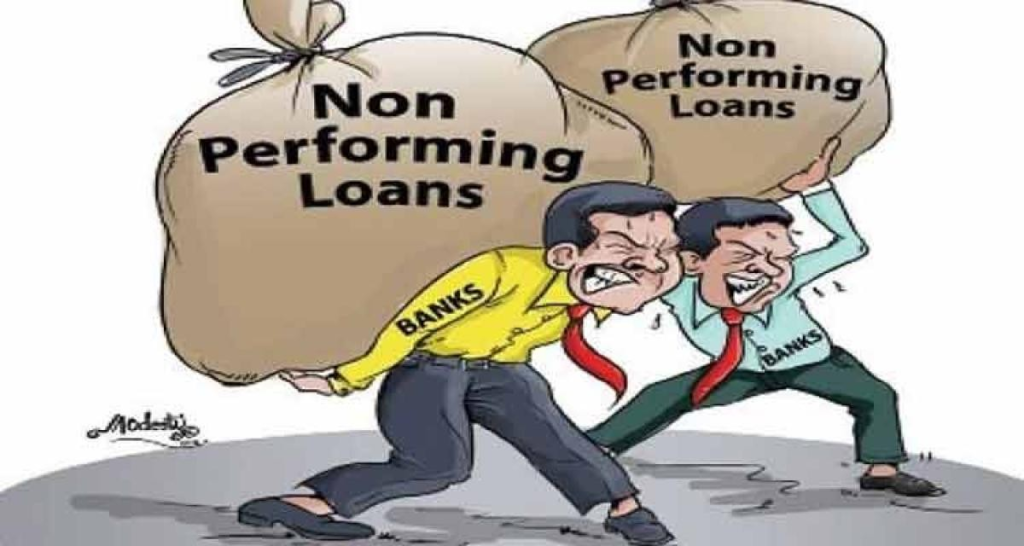
Against the backdrop of economic pressures on households and businesses, banks are now struggling with a rising loan default by businesses, leading to a significant increase in the bad loans portfolio of banks to N21.2 trillion.
Financial Vanguard’s tracking of data on loans to customers by the top 11 banks as disclosed in their unaudited financial statements for the nine months ended Q3’25, showed that nine of the banks recorded an increase in bad loans (Non Performing Loans, NPL).
Amongst the 11 banks, three of the Tier-1 banks recorded increases in their NPLs, while all the six Tier-2 banks recorded growth in NPLs.
Collectively, the NPLs of the 11 banks rose by five per cent to N21.2 trillion at the end of Q3’25 from N20.2 trillion at the end of Q4’24.
A further breakdown of their loan portfolio showed that the Tier-1 banks took the largest share of the bad loans, collectively recording a bad loan size of N17.63 trillion at the end of Q3’25 from N16.943 trillion at the end of Q4’24.
The Tier-2 banks collectively recorded a 10 per cent increase in NPLs to N3.54 trillion at end of Q3’25 from N3.21 trillion at end of Q4’24.
Confirming this trend, the Central Bank of Nigeria, CBN, in its Financial Stability Report for June 30th, 2025, said: “The non-performing loans (NPLs) ratio increased to 5.76 per cent, above the regulatory benchmark of 5.00 per cent and 4.87 per cent recorded at end-December 2024.
“In addition, the ratio of NPLs net of provisions to capital increased to 13.90 per cent from 4.91 per cent at end-December 2024. The ongoing recapitalisation exercise of banks and sustained GSI implementation were expected to bolster loss-absorption buffers and preserve banking system stability.”
COVID-19 forbearance
Financial Vanguard investigations revealed that the upward trend in NPLs is being driven by two major factors.
First is the decision of the CBN to withdraw regulatory forbearance on loans to households and businesses affected by the COVID 19 pandemic.
The forbearance measures included a one-year extension of moratoriums on loan repayments. Banks were also allowed to consider time-limited restructuring of loan terms for sectors severely affected by the pandemic, including oil and gas and agriculture. Furthermore, the CBN reduced interest rates on its intervention facilities to five percent, though this was subsequently returned to nine percent in July 2022.
In 2023, the CBN extended forbearance on certain prudential limits, including violations of the single obligor threshold and the net open position.
However, last year, the apex bank in a circular, announced measures to support banks to exit the forbearance regime. These include suspension of dividend payments, bonuses to directors and senior management and investments in foreign subsidiaries until capital levels and provisioning for NPLs are fully restored to the regulatory threshold.
“This temporary suspension is until such a time as the regulatory forbearance is fully exited and the banks’ capital adequacy and provisioning levels are independently verified to be fully compliant with prevailing standards. This supervisory measure is intended to ensure that internal resources are retained to meet existing and future obligations and to support the orderly restoration of sound prudential positions,” the CBN said.
Loan defaults
The second factor driving the increase in banks’ NPLs is the upward trend in loan defaults especially by businesses.
According to the Credit Condition Report of CBN, banks recorded higher loan defaults by corporates in the last three quarters of 2025.
In Q2’25, the CBN disclosed that, “Lenders reported higher default rates for Secured and Unsecured lending. For Corporate lending, all business types reportedly had higher default rates.”
Similarly, in Q3’25, the apex bank said: “Lenders reported lower default rates for Secured lending, while Unsecured and Corporate lending of all business types recorded higher default rates.”
Also in Q4’25, the CBN said: “Lenders reported higher default rates for Secured, Unsecured and all Corporate lending types in Q4 2025.”
Analysts comment
Highlighting the factors behind the upward trend in loan defaults as well as rise in NPLs, Tunde Abidoye, Head of Equity Research at FBNQuest Securities Limited, said: “A major factor behind the rising NPLs is the elevated levels of interest rates. Typically, there is a strong correlation between the level of interest rates and NPL ratios, as businesses and individuals typically have to cope with higher debt service burdens.
“A secondary and very important factor is the CBN’s lifting of forbearance on old covid-19 loans effective from June 2025. That meant banks had to report those loans that previously benefited from the regulatory relief.”
“Two factors largely drove the higher NPLs,” said Ayokunle Olubunmi, Head, Financial Institutions Ratings, Agusto & Co. “First, the challenging economic conditions that have adversely impacted individuals and business performance.
Second, the termination of the regulatory forbearance forced some banks to classify some underperforming loans hitherto classified in Stage 2.”
Banks’ insight
Speaking to Financial Vanguard on condition of anonymity, a senior banker, who
heads the Financial Institutions department in a Tier-2 bank, explained: “The first factor is the suspension of the forbearance. A lot of sub-standard loans were packed into the loans under the forbearance. The removal of the forbearance compelled banks to properly classify them as NPL.
“And there is the Basle 3 regime, which compels stricter classification of loans and impairment recognition. Though Nigeria is not yet a Basle 3 compliant country and the CBN is not pushing banks to adopt it yet, some banks, due to international affiliations, or positioning for international businesses are adopting Basel 3 criteria in loan classification.
“The second factor is the impact of decline in purchasing power of consumers on businesses. Though macroeconomic conditions are improving, the story is different for households, individuals and businesses. The decline in purchasing power makes consumers cut down on the quantity of goods purchased and this is affecting a number of businesses resulting in the emergence of loan defaults here and there.”
Providing insights into some of the macroeconomic challenges causing higher loan defaults, a Tier-Bank top official, who spoke on condition of anonymity, said: “A major turning point was 2023, when the current administration came into power. Loan defaults increased across different sectors, starting with oil and gas. Many of the defaults in that sector were driven by foreign exchange exposure.
“At the time, companies opened Letters of Credit (LCs) in foreign currency, backed by naira cash collateral. Before May 29, the exchange rate was around N550 to the dollar, even after banks applied buffers of about 150%. Customers provided naira equivalent to support those LCs, while banks relied on credit lines with correspondent offshore banks.
“However, when the naira depreciated sharply — with the dollar rising to around N1,800 — these exposures effectively became distressed loans. Many customers simply did not have the capacity to meet their obligations under the new exchange rate reality.
“The removal of fuel subsidies also compounded the problem. Fuel prices rose sharply, and it took time for businesses and consumers to adjust. This led to further stress across several sectors.
“Another affected segment was construction. Many projects became unviable due to rising costs, leading to repayment challenges.”
The post Businesses buckle under debt as defaults push bad loans to N21.2trn appeared first on Vanguard News.
Read the full article
Continue reading on vanguardngr.com
More from vanguardngr.com

3 minutes ago
চিরনিদ্রায় 'টেলিগ্রাম যুগের' সেই শেষ নায়ক: মাঠের ধুলো ছেড়ে অনন্তলোকে রণজিৎ দাস

3 minutes ago
Синоптик рассказал о погоде в Москве в ночь на понедельник

4 minutes ago
অটোমেশনের পথে মালয়েশিয়ার শ্রমবাজার, সংকটে পড়বে বাংলাদেশ
4 minutes ago