5 min read
Bloody politics of godfathers and godsons
vanguardngr.com
Saturday, January 31, 2026
•How political sons turned against their godfathers By Ibrahim Hassan-Wuyo Political power in Nigeria is often built on alliances, but it is frequently destroyed by ambition and the struggle for supremacy. Across the country, political godfathers and their protégés have repeatedly walked th...
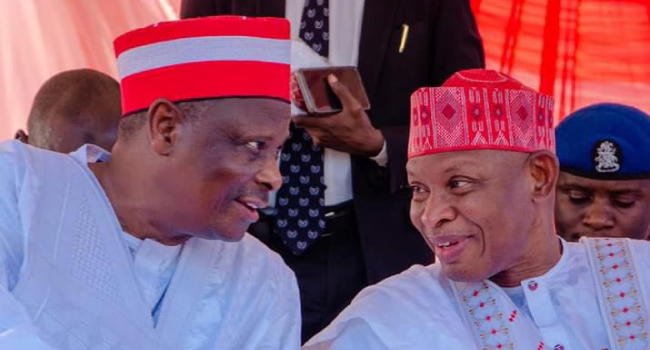
•How political sons turned against their godfathers
By Ibrahim Hassan-Wuyo
Political power in Nigeria is often built on alliances, but it is frequently destroyed by ambition and the struggle for supremacy. Across the country, political godfathers and their protégés have repeatedly walked the same path: unity in opposition, victory at the polls, and rupture in power.
Last week in Kano State, one such alliance collapsed dramatically as Governor Abba Kabir Yusuf formally dumped the New Nigeria Peoples Party, NNPP, for the ruling All Progressives Congress, APC, following a bitter fallout with his political godfather, Rabiu Musa Kwankwaso. The defection did not merely redraw party lines in Kano; it reopened a familiar and troubling chapter in Nigeria’s democratic journey — the implosion of godfather–protégé relationships once power is secured.
Since the return to democracy in 1999, Nigeria has witnessed a long list of such political divorces, some mild, others violent, but all revealing the fragile foundations of power built on patronage rather than ideology.
Kano: From Kwankwaso–Ganduje to Kwankwaso –Yusuf
One of the most prominent fallouts in Kano State occurred between Kwankwaso and his long-time ally, Abdullahi Umar Ganduje. Ganduje served as Kwankwaso’s deputy governor from 1999 and again from 2011. Endorsed as Kwankwaso’s successor in 2015, Ganduje’s emergence initially symbolised continuity. But soon after assuming office, cracks appeared in their relationship, culminating in Kwankwaso’s eventual exit from the APC.
The Kwankwaso–Abba Kabir Yusuf rupture represents the latest chapter. Kwankwaso backed Yusuf’s governorship ambition twice — first in 2019 under the PDP and later in 2023 under the NNPP, which he won. Yusuf, a former Commissioner for Special Duties under Kwankwaso, rose through the political structure built by his mentor, only to later assert independence.
Kaduna, Lagos, Rivers: When loyalty gives way to power
In Kaduna, the fallout between former governor Nasir El-Rufai and his successor, Uba Sani, shocked many observers. El-Rufai played a decisive role in Uba Sani’s rise, but disagreements after the transition of power led to political estrangement and El-Rufai’s eventual defection from the APC.
In Lagos, President Bola Tinubu’s rift with former governor Akinwunmi Ambode underscored the limits of loyalty within political machines. Tinubu’s withdrawal of support effectively ended Ambode’s political career in 2019, proving that godfatherism can be as ruthless as it is powerful.
Rivers State remains a theatre of intense godfather–protégé conflict. The clash between Governor Siminalayi Fubara and his predecessor, Nyesom Wike, plunged the state into crisis and invited federal intervention. Ironically, Rivers had earlier witnessed a similar rupture between Rotimi Amaechi and Wike — once allies, later bitter rivals — highlighting the cyclical nature of political betrayal.
The South-East wars: Abia, Enugu, Anambra
The South-East has produced some of Nigeria’s most dramatic godfather–protégé battles.
In Abia State, the fierce rivalry between Senator Orji Uzor Kalu and his successor, Theodore Orji, transformed from partnership to open warfare, polarising the state’s political landscape.
In Enugu, Chimaroke Nnamani’s fallout with Sullivan Chime was preceded by an earlier clash between Nnamani and Chief Jim Nwobodo, his own political benefactor. The pattern was clear: yesterday’s godfather becomes today’s obstacle.
In Anambra, the legendary battle between Governor Chris Ngige and political financier Chris Uba remains a defining moment in Nigeria’s democratic history, culminating in attempted abductions, institutional breakdown and federal intervention.
Other fault lines
Elsewhere across the federation, similar ruptures have played out: Attahiru Bafarawa and Aliyu Wamakko in Sokoto; Ahmad Sani Yarima and Mahmud Shinkafi in Zamfara; Danjuma Goje and Ibrahim Dankwambo in Gombe; Peter Odili and Nyesom Wike in Rivers; Mohammed Badaru Abubakar and Umar Namadi in Jigawa; Olusegun Obasanjo and Atiku Abubakar at the federal level.
The politics behind the ruptures
Analysts argue that these recurring conflicts expose a structural weakness in Nigeria’s democracy. Godfatherism, though a vehicle for political recruitment and mobilisation, has become a source of instability, elite conflict and governance paralysis.
In most cases, protégés depend on godfathers for party tickets, funding and grassroots structures. But once in office, constitutional autonomy collides with informal expectations of loyalty, control and patronage.
The Kano experience — from Kwankwaso and Ganduje to Kwankwaso and Abba Kabir Yusuf — typifies this contradiction. Power transitions rarely extinguish claims of political ownership, making conflict almost inevitable when protégés seek independence.
Similarly, the Tinubu–Ambode episode shows that even highly institutionalised political machines are vulnerable when internal consensus collapses. Rivers presents a more extreme case, where rivalry escalated into constitutional crises and federal intervention.
What emerges is a political culture in which ideology is secondary to control of state resources and party structures. Party defections, often justified by “internal crises” or “developmental priorities,” reflect weak party discipline and the absence of internal democracy.
As Nigeria approaches the 2027 general elections, these godfather–protégé wars may intensify elite realignments, reshape party alliances and deepen voter cynicism. Until political parties strengthen internal governance and reduce dependence on personality-driven patronage, the rebellion of political sons against their godfathers will remain a defining and destabilising feature of Nigeria’s democracy.
The post Bloody politics of godfathers and godsons appeared first on Vanguard News.
Read the full article
Continue reading on vanguardngr.com


