4 min read
Okonjo-Iweala urges Nigeria to shift from importing tech to local manufacturing
vanguardngr.com
Friday, January 30, 2026
By Juliet Umeh Director-General of the World Trade Organisation, WTO, Dr. Ngozi Okonjo-Iweala, has urged Nigeria to move decisively beyond importing technology to manufacturing it locally, warning that sustained dependence on foreign technology weakens the country’s industrial base and constra...
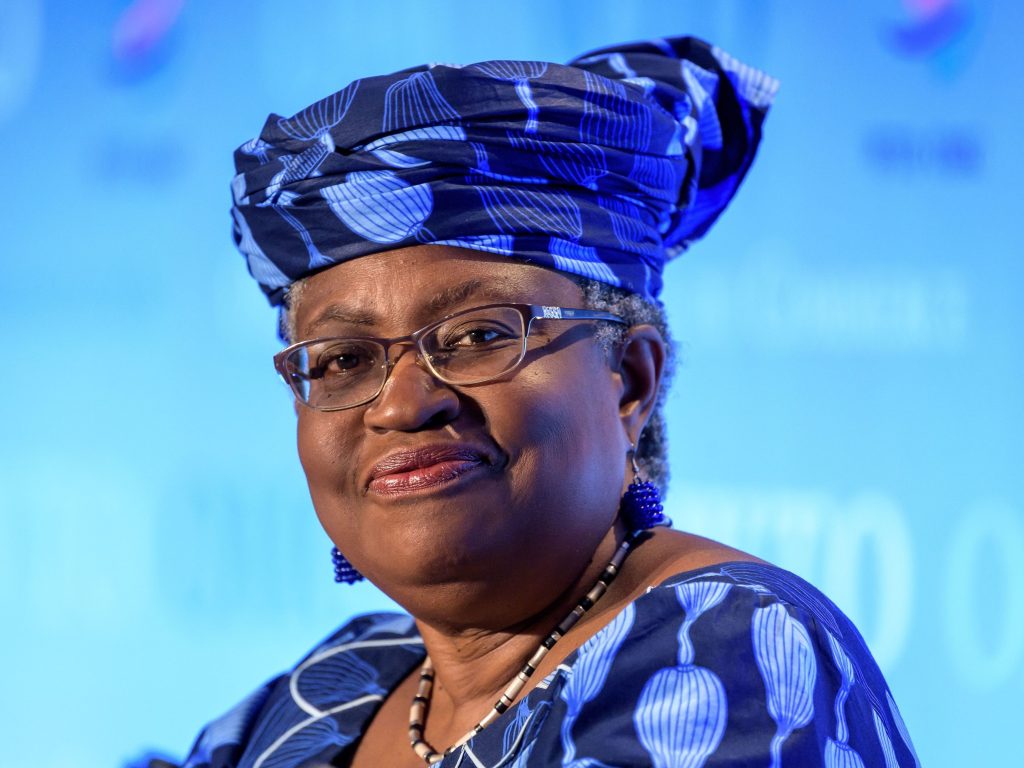
By Juliet Umeh
Director-General of the World Trade Organisation, WTO, Dr. Ngozi Okonjo-Iweala, has urged Nigeria to move decisively beyond importing technology to manufacturing it locally, warning that sustained dependence on foreign technology weakens the country’s industrial base and constrains job creation in the digital economy.
Speaking at Ahmadu Bello University, ABU, Zaria, Okonjo-Iweala said the current disruption of the global order, driven by technology, geopolitics and climate pressures, presents both serious risks and unprecedented opportunities for Nigeria and Africa, if they are prepared to act strategically.
“It is always a pleasure to come home to Nigeria, but it is particularly special to be here at one of the country’s most important seats of learning,” she said, stressing that universities such as ABU must remain central to Africa’s technological, industrial and economic transformation.
Universities as Engines of Innovation
Tracing Nigeria’s post-independence journey, Okonjo-Iweala recalled that at independence in 1960, the country had only one degree-awarding institution, making the rapid expansion of universities a critical pillar of nation-building.
She noted that institutions such as ABU laid the foundation for Nigeria’s scientific, technological and entrepreneurial capacity.
Founded in 1962 as the University of Northern Nigeria, ABU has evolved into a multidisciplinary institution producing graduates across engineering, medicine, sciences, ICT, public administration and the humanities.
“Research conducted here has advanced the frontier of knowledge and offered practical solutions to real-world problems, from animal feed innovations during dry seasons to wind power generation in rural areas,” she said.
Turning to global trends, the WTO chief identified technology, particularly the internet and artificial intelligence, AI, as one of the most disruptive forces reshaping trade, production and employment worldwide.
“The technological shift we are experiencing has made it easier to communicate, produce and trade, but not everyone has shared equally in the gains,” she said, warning that automation and AI could deepen inequality if not properly managed.
She stressed that multilateral institutions and global trade rules must evolve to respond to emerging technologies such as AI and quantum computing.
“We need a new kind of multilateralism, one that is nimble, responsive and capable of addressing new global opportunities,” she said.
Okonjo-Iweala said Africa stands to benefit from what the WTO now describes as “re-globalisation”, the diversification of global supply chains away from over-dependence on a few countries.
She identified opportunities in labour-intensive manufacturing, critical minerals processing, renewable energy technology, pharmaceuticals, agro-processing and electric vehicle, EV, supply chains.
“Africa has the capacity to process its critical minerals all the way to EV battery manufacturing,” she said, pointing to Nigeria’s emerging lithium processing investments and vast renewable energy potential.
Reinforcing her call for local technology production, she said Nigeria must stop importing technologies it can manufacture domestically.
“Instead of importing solar panels, we should be manufacturing them here. That is how we create jobs, build resilience and grow our economy,” she said.
Okonjo-Iweala warned that Nigeria’s projected economic growth of 4.4 percent remains insufficient once population growth is factored in, calling for sustained growth of 6 to 7 per cent driven by productivity, technology and value addition.
She said achieving this would require strong digital infrastructure, skills development and innovation-friendly policies, alongside full implementation of the African Continental Free Trade Agreement, AfCFTA.
“Technology-enabled trade and deeper regional integration could increase intra-African trade by up to 45 per cent and lift millions of people out of poverty,” she said.
With Africa projected to account for about 25 per cent of the global working-age population by 2050, Okonjo-Iweala described Nigeria’s young population as one of its greatest technology assets.
“On an ageing planet, Africa’s youth represent the world’s future talent pool,” she said, urging universities, policymakers and the private sector to better align education, innovation and industrial strategy.
She, therefore, called for stronger collaboration between academia, industry and government to ensure Nigeria does not miss the opportunities created by global technological disruption.
“This country has what it takes. What we need is urgency, coordination and the courage to invest in our people and our ideas,” Okonjo-Iweala said.
The post Okonjo-Iweala urges Nigeria to shift from importing tech to local manufacturing appeared first on Vanguard News.
Read the full article
Continue reading on vanguardngr.com

