7 min read
Petrol to cost more as crude oil price rises further
vanguardngr.com
Friday, January 30, 2026
By Udeme Akpan, Obas Esiedesa, Godwin Martha & Bashiru Ayuba On the heels of upward adjustments in the pump price of petrol three days ago, Nigerians may face another round of increases following a sustained rise in crude oil prices on the international market. The price of Nigeria’s Bo...
By Udeme Akpan, Obas Esiedesa, Godwin Martha & Bashiru Ayuba
On the heels of upward adjustments in the pump price of petrol three days ago, Nigerians may face another round of increases following a sustained rise in crude oil prices on the international market.
The price of Nigeria’s Bonny Light crude rose to $70.30 per barrel from $64 per barrel last week, representing an increase of about 10 per cent and the highest level recorded this year.
Similarly, the price of Brent crude, which is used to benchmark other crude grades, rose to $70.15 per barrel from $66 per barrel, while Murban crude increased to $68.01 per barrel from $65.20 per barrel.
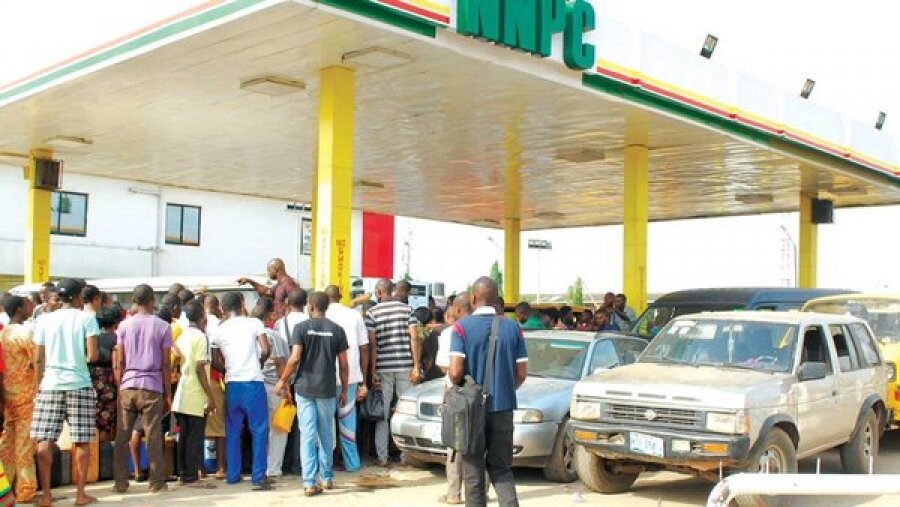
Earlier in the week, petrol stations had marked up their pump prices to an average N850 per litre, up by about 14.3 per cent from N750 it sold on Monday, attributing the price hike to the rise in crude oil price.
The Dangote Refinery and oil marketers had also justified increases in global crude oil prices, explaining that crude oil is the main determinant of input cost.
But while crude oil price increased by 6.2 per cent, the local retail price increased by 14.3 per cent, indicating that local oil companies more than doubled the rate of increases in their main input cost, crude oil.
The rise in crude prices led to a 14.3 per cent increase in the gantry price of petrol at the Dangote Refinery, which rose from N699 per litre to N799 per litre.
Following the adjustment, petrol retail outlets in Abuja and Lagos as well as other parts of the country, also raised their pump prices.
NNPC Retail outlets also increased the price to N835 per litre from N815, while other marketers implemented steeper hikes. AYM Shafa, for instance, raised its pump price from N815 per litre to N900.
Speaking to Vanguard on the pump price increases, National Public Relations Officer, Independent Marketers Association of Nigeria, IPMAN, Chief Chinedu Ukadike, blamed the hike on rise in crude oil price.
He said: “Crude oil price has increased. The refiners have also increased their price. Once your buying source increases, you will increase. Dangote has increased by over N110.”
On why marketers raised pump prices while still having old stock, he said: “When did the crude oil price go up? It is not the first day that it went up. So, that is the nature of the business. Even if we sell our old stock, we can’t buy a new one at the old price. The margin is high. The buying rate and margin is high.
“The marketers have to find a way to see how they can be able to continue to be in business.”
Diesel prices up, petrol remains unchanged
Meanwhile, Vanguard findings show a mixed reaction in the market, yesterday.
While petrol pump prices remained generally unchanged, diesel prices went up at various depots. At Emadeb it sold for N930 per litre, up from N910 the previous day while, Ibeto is now selling at N950, up from N907, and Integrated is selling at N950, up from N910.
Crude oil market
The general rise in crude oil prices was attributed to a significant decline in United States crude inventories, which fell by 2.3 million barrels in the week ended January 24, 2026.
According to the US Energy Information Administration, EIA, the decline reduced commercial crude stockpiles to 423.8 million barrels, about three per cent below the five-year average for this time of year.
However, the development was also linked to growing concerns that a possible US military strike on Iran, the Organisation of Petroleum Exporting Countries, OPEC’s fourth-largest producer — could disrupt as much as 3.2 million barrels per day of oil supply.
The oil market began responding shortly after U.S. President Donald Trump threatened: “A massive armada is heading to Iran. It is moving quickly, with great power, enthusiasm, and purpose.”
He added: “It is a larger fleet, headed by the great aircraft carrier Abraham Lincoln, than that sent to Venezuela. Like with Venezuela, it is ready, willing, and able to rapidly fulfil its mission, with speed and violence, if necessary.”
There were speculations that the warships had arrived in the Middle East and begun moving from the Asia-Pacific region last week amid rising tensions between Washington and Tehran.
Impact on Nigeria
Amidst the global concerns, industry experts are worried that Nigeria’s petroleum sector is vulnerable and will also impact negatively on the economy in general and households in particular.
Expect pressure on businesses, households — Prof. Iledare
Speaking to Vanguard on the situation, Prof. Wumi Iledare, a petroleum economist, said: “Crude oil has risen to more than $70 per barrel because of global political tensions, not because demand has suddenly increased. The immediate effect is clear: the prices of petroleum products, especially petrol and diesel, are likely to go up.
“For Nigeria, this is important. When crude oil prices rise, petrol and other petroleum product prices usually follow, especially since we still import much of what we consume. The result is higher transport costs, rising prices of goods, and increased pressure on household budgets.”
Expect higher energy costs — CPPE
Also speaking to Vanguard, Dr. Muda Yusuf, CEO, Centre for the Promotion of Private Enterprise, CPPE, described the development as a double-edged sword for the Nigerian economy.
“The rise in crude oil prices is positive for fiscal revenues, as prices are above the benchmark of $64 per barrel, which could result in excess revenue if sustained. It may also support foreign reserves and help stabilise the exchange rate.
“On the other hand, it would lead to higher energy costs because petroleum products, especially petrol and diesel, have been deregulated. It could also trigger an increase in the price of cooking gas,” he said.
He added that higher fuel prices will raise production costs, particularly for small and medium-scale enterprises that rely heavily on diesel due to unreliable power supply, while higher logistics costs will further fuel inflation.
Consumers should expect rise in petrol price — Adigun
Managing Director of AHA Consultancies, Mr. Henry Adigun, explained that an increase in crude oil prices will inevitably translate into higher petrol prices, as crude oil is the primary raw material used in refining fuel.
“Yes, certainly, prices will increase. This simply means consumers will pay more for fuel because crude oil is what is used to produce petrol and other petroleum products,” he said.
Explaining why pump prices at filling stations often rise faster than the increase in crude oil prices, Adigun noted that foreign exchange volatility plays a major role.
“This is because foreign exchange is also a factor. Beyond crude oil prices, the current pump price is artificially low, lower than the actual cost of products, largely due to the ongoing price war between fuel importers and the Dangote Refinery. As a result, the current price does not fully reflect market forces,” he added.
Similarly, a Partner at Kreston Pedabo, Mr. Olufemi Idowu, said while higher crude oil prices will impose additional costs on consumers, they would also boost government revenue.
“I look at this from two perspectives. First is the implication for the country. We cannot deny the fact that crude oil exports remain our major source of revenue. An increase in international crude oil prices is therefore, positive for government earnings and budgeting,” he said.
However, Idowu warned that the impact on consumers would be significant, especially in a deregulated market.
“On the other hand, from the consumer perspective, the implication is clear. With deregulation and removal of subsidy, a rise in crude oil prices makes an increase in petrol pump prices very likely,” he said.
He added that higher fuel prices will have multiplier effects across the economy.
“Transportation costs are likely to rise. Construction materials will become more expensive due to higher logistics costs, and production costs will increase. Ultimately, this will affect consumer goods prices across board,” Idowu explained.
According to him, the knock-on effects will extend to daily commuting and general cost of living, further worsening inflation.
“When prices of goods and services rise, purchasing power declines. This situation will inevitably lead to higher inflation, as more money chases fewer goods,” he said.
The post Petrol to cost more as crude oil price rises further appeared first on Vanguard News.
Read the full article
Continue reading on vanguardngr.com
More from vanguardngr.com

24 minutes ago
UPSSSC releases Junior Assistant main exam admit cards, test scheduled for Feb 1
25 minutes ago
Fidson reports 61% jump in annual profit amid prescription drug boom
25 minutes ago
आगरा में फिर एनकाउंटर... राज चौहान हत्याकांड के तीन आरोपियों के पैर में लगी गोली, 25-25 हजार का था इनाम
25 minutes ago