4 min read
row of circular red panels lines the facade of café on-site by aptdotapt in china
designboom.com
Friday, January 30, 2026

dual facades shield café on-site by aptdotapt in china Located in a small town in Zhejiang, China, Café On-Site (开场 Kai-Chang) by aptdotapt is conceived as a gathering point for the neighborhood. The café explores how energy circulates through space, bodies, and everyday actions. Across t...
dual facades shield café on-site by aptdotapt in china
Located in a small town in Zhejiang, China, Café On-Site (开场 Kai-Chang) by aptdotapt is conceived as a gathering point for the neighborhood. The café explores how energy circulates through space, bodies, and everyday actions. Across the project, a consistent set of geometric elements links brand identity to architectural form. Dynamic curves, circular metal components, four-point star racks, and inverted triangular linear lights recur throughout the interior and facade in different scales and materials, establishing a coherent spatial language that connects two-dimensional graphics with three-dimensional experience.
Set within a dense commercial district, the café’s front and rear facades respond to very different surroundings. The front faces a neighboring barbecue restaurant, lively but visually and environmentally challenging. Instead of relying on transparent glazing or graphic signage alone, the architects assemble five hollow semi-cylindrical volumes to form a semi-enclosed frontage. Their repetition establishes rhythm and identity while filtering smoke, noise, and visual clutter. At a human scale, horizontal surfaces embedded within the cylinders invite leaning and sitting. At night, warm light escapes through the curved gaps, offering partial views of the animated interior beyond. In contrast, the rear facade opens fully toward an adjacent park lawn. Here, boundaries dissolve as interior tracks extend outward, allowing furniture to slide directly into the landscape. With minimal effort, the café expands into public green space, shifting from enclosed room to outdoor social field.
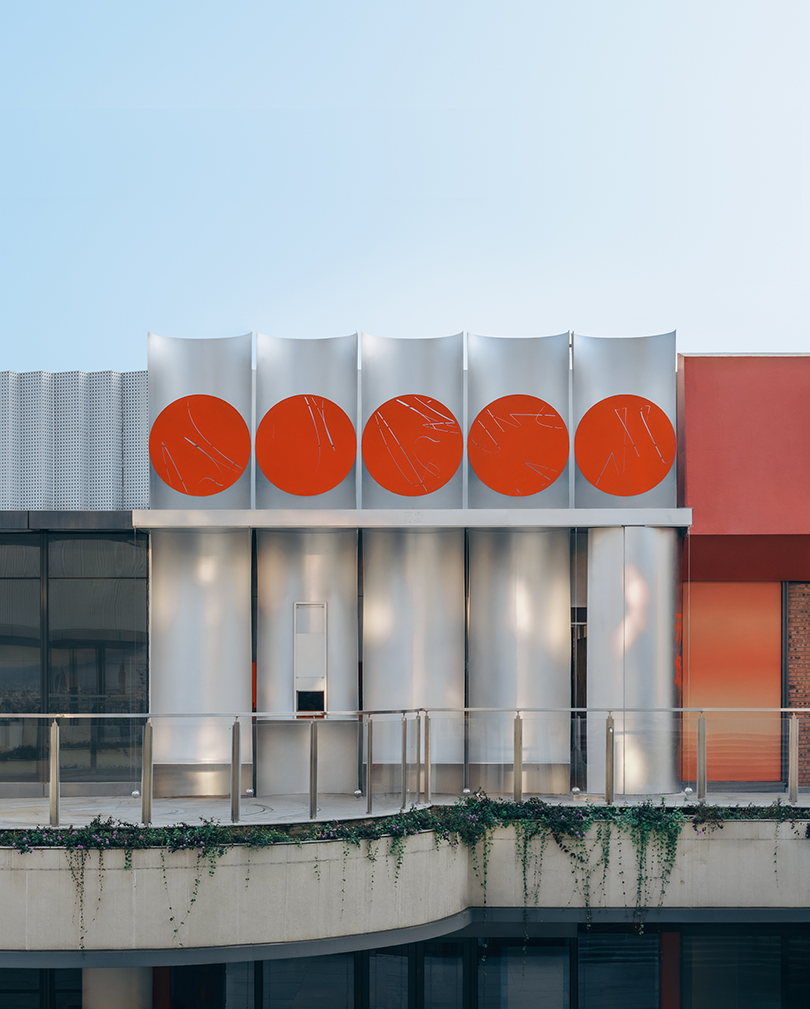
all images by Zhu Yumeng
a name that frames presence, place, and local culture
The project was developed holistically, from brand strategy and naming to visual identity and interior design. The Chinese name 开场 (Kai-Chang) carries multiple layers of meaning. It refers to the opening moment of a performance, the setting of a stage, and the idea of a site or field, extending toward atmosphere and spirit of place. Phonetically, it also recalls 厂 (factory), a nod to Wenzhou’s entrepreneurial culture and its legacy of small-scale manufacturing. The English name On-Site reinforces this emphasis on presence and locality, grounding the café in its immediate social and urban context.
Rather than relying on a single linear layout, the interior plan introduces subtle rotations across major zones. These angular shifts are paired with four formally distinct columns that organize circulation and sightlines while breaking spatial uniformity. The result is a sequence of open and compressed moments that encourage movement, pause, and informal occupation. Visitors are drawn either toward more expansive areas or into sheltered corners, allowing multiple social scenarios to unfold simultaneously. This becomes the first, spatial layer through which the idea of energy that underpins the project is made perceptible.
The concept of spatial energy is further translated into a series of mechanical elements embedded throughout the café. Entry becomes a performative act as a curved door slides into a recessed circular track. Behind the counter, baristas lock fittings into grooves to pass drinks through the takeaway window. A planter-centered table anchors the space, while a red curtain at the far end can be drawn by guests to frame photos or create a temporary enclosure. A four-point star display rack allows staff to present seasonal pastries by rolling them directly toward customers. On pleasant days, tables glide along embedded tracks, extending coffee rituals outdoors. These mechanisms turn routine actions into spatial events, allowing the concept of energy to be experienced through use rather than symbolism.
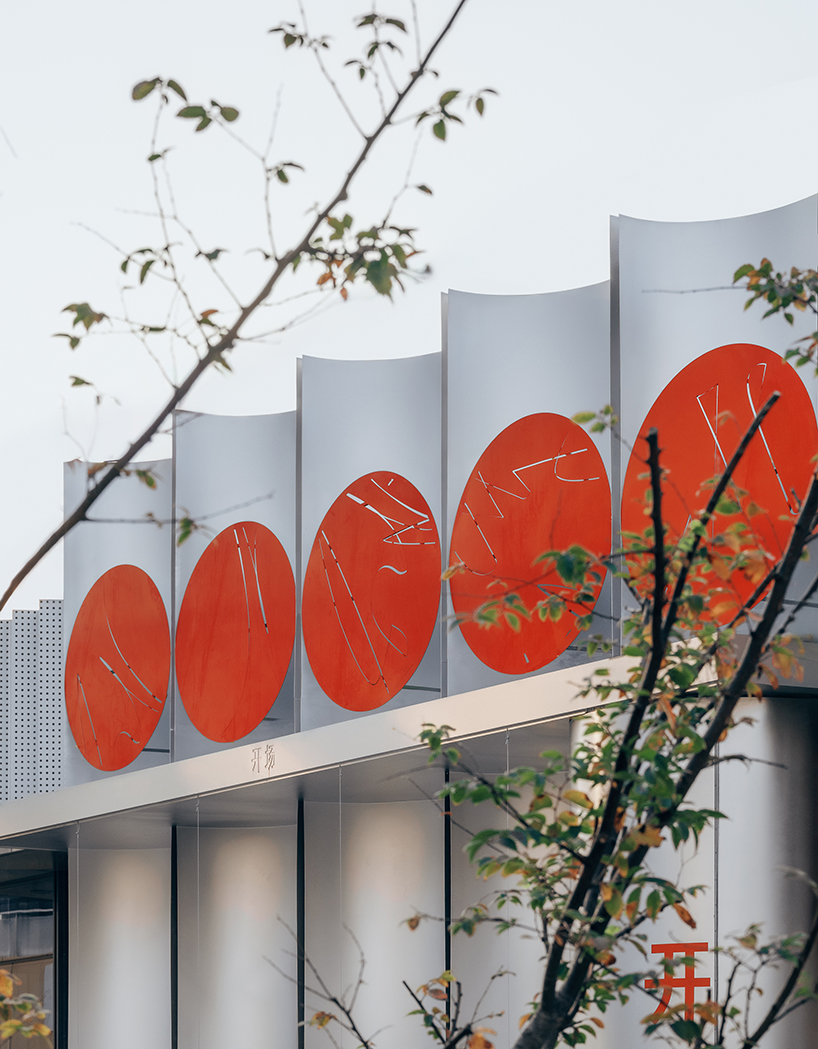
the architects assemble five hollow semi-cylindrical volumes to form a semi-enclosed frontage
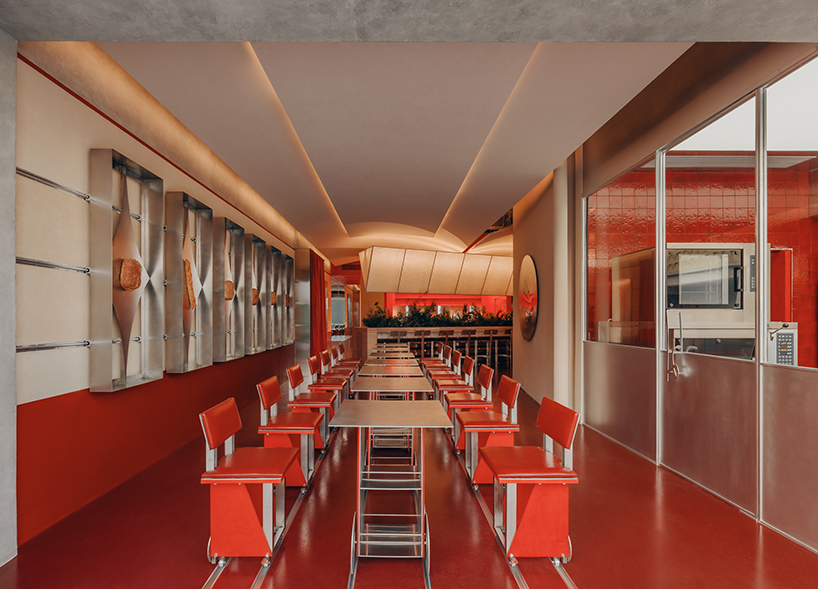
the interior plan introduces subtle rotations across major zones
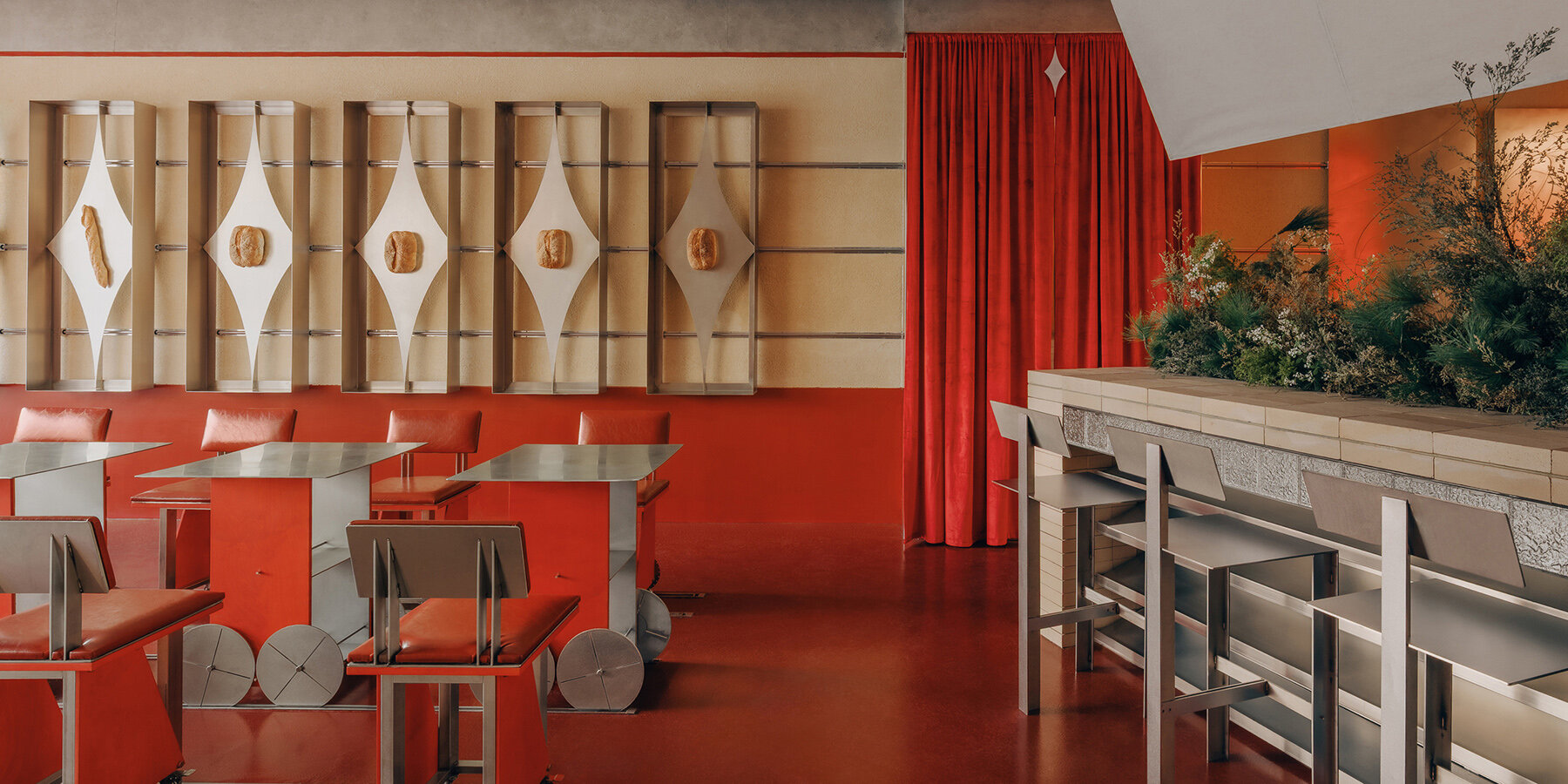
the interior plan introduces subtle rotations across major zones
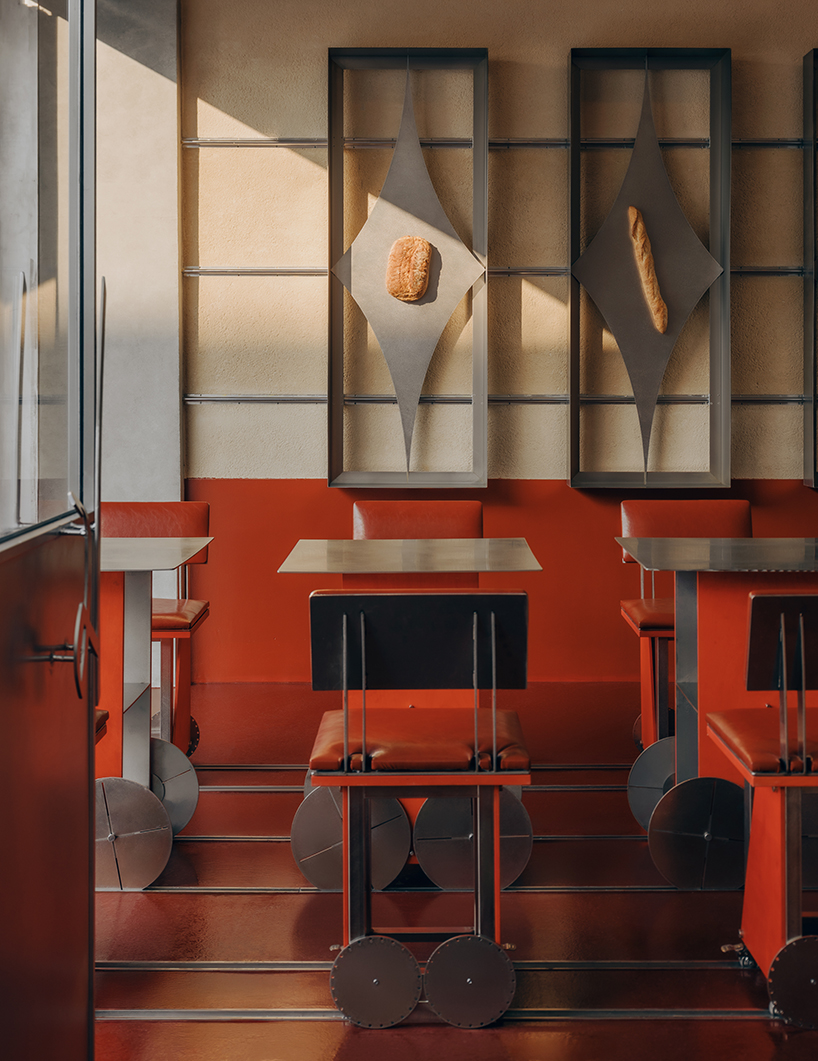
a sequence of open and compressed moments that encourage movement, pause, and informal occupation
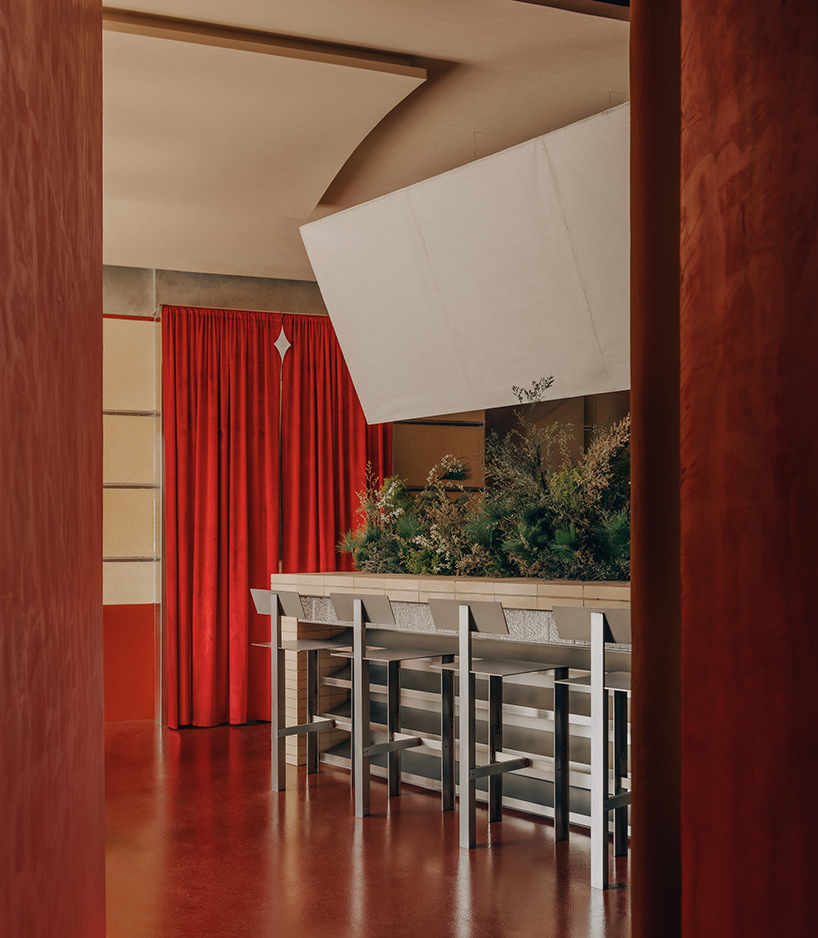
multiple social scenarios unfold simultaneously
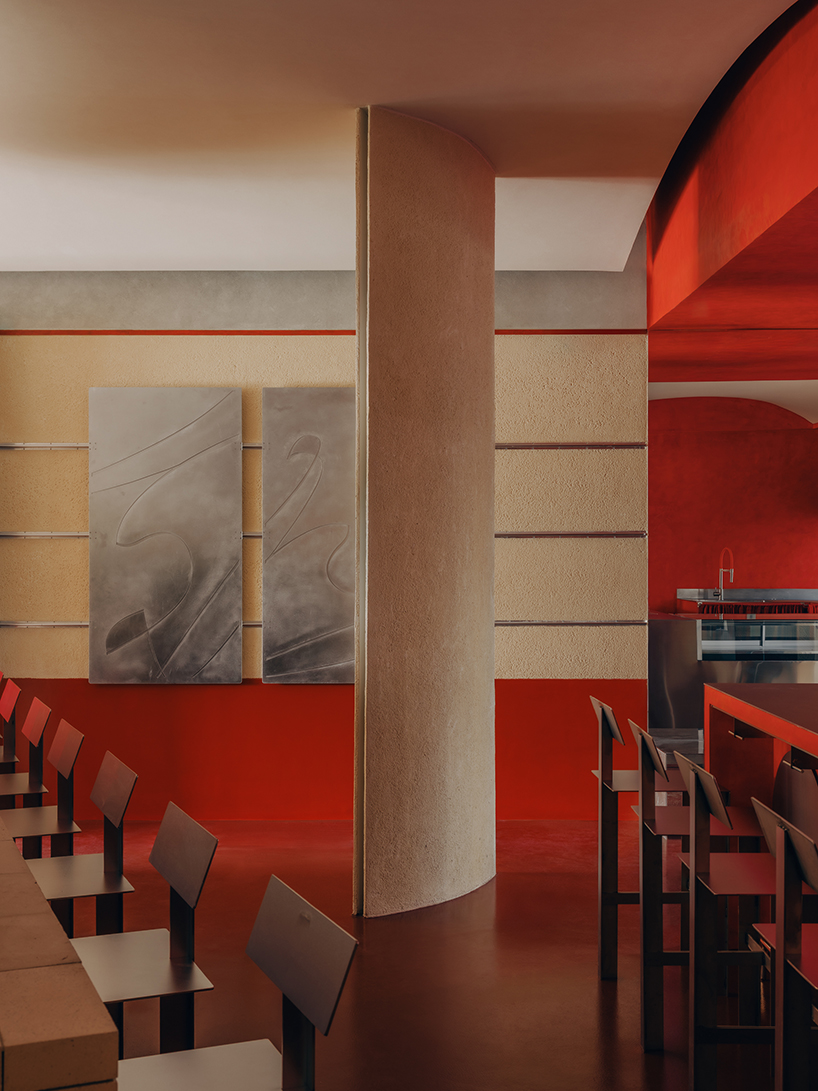
the concept of spatial energy is translated into a series of mechanical elements embedded throughout the café
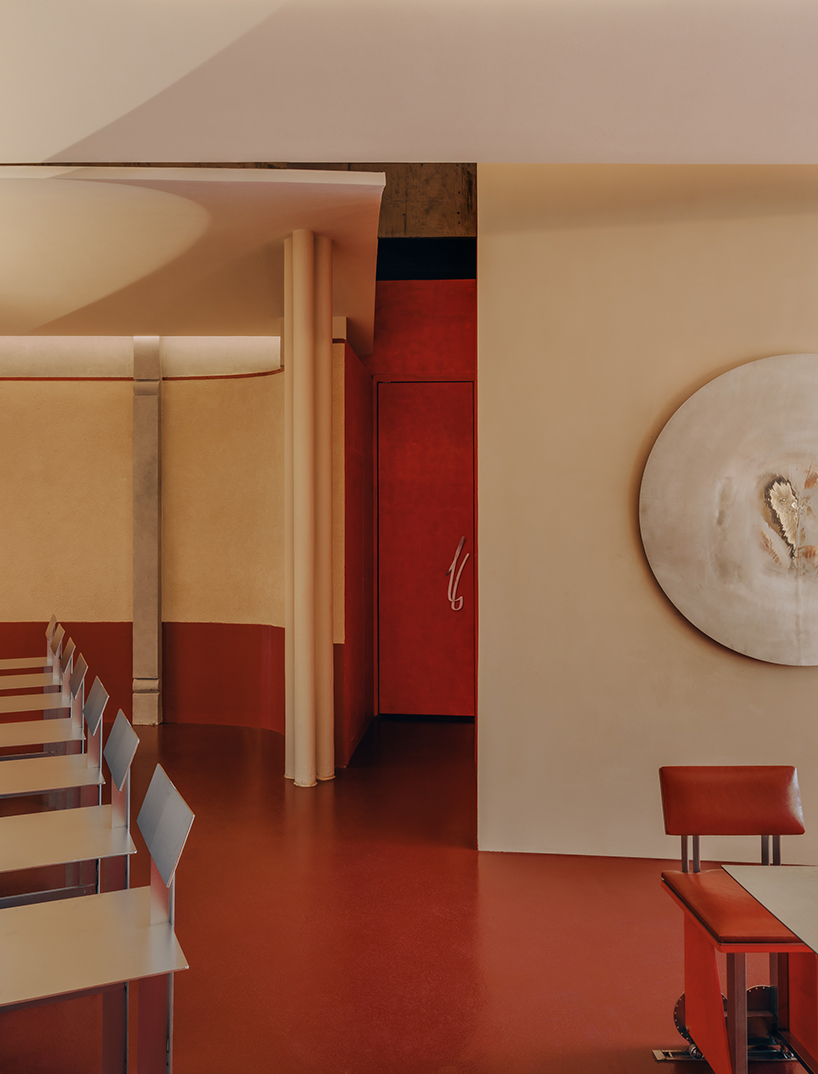
the English name On-Site reinforces the emphasis on presence and locality
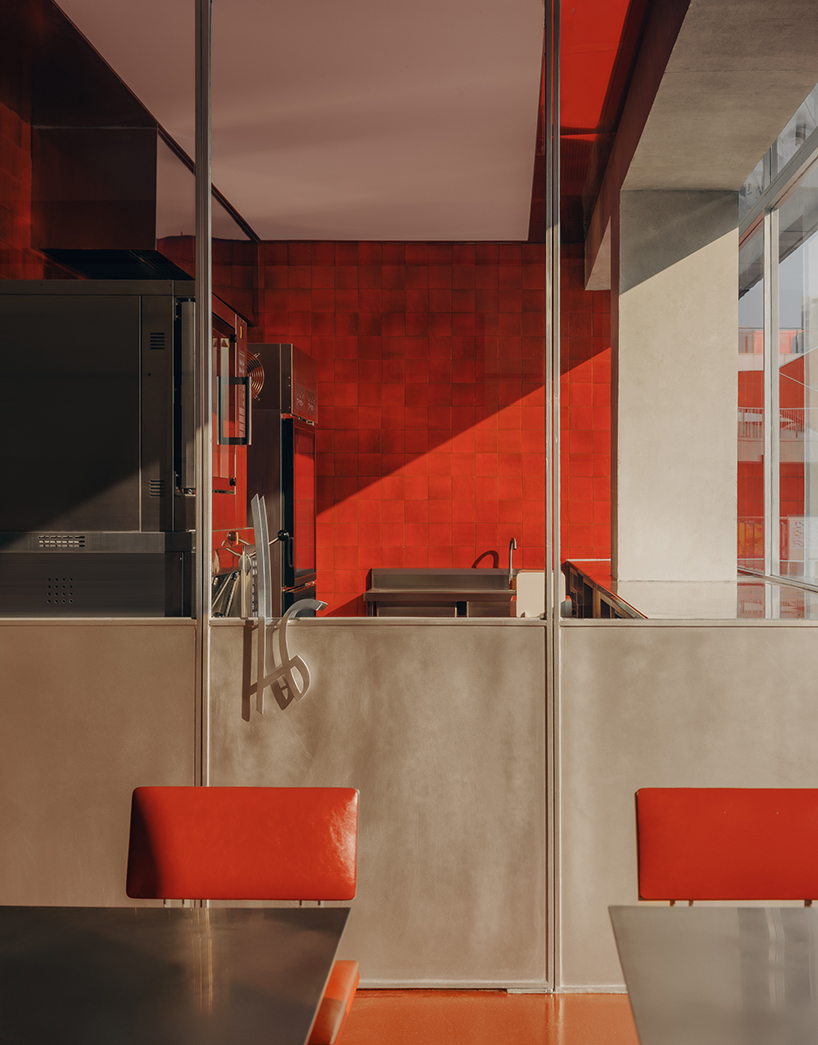
the café explores how energy circulates through space, bodies, and everyday actions
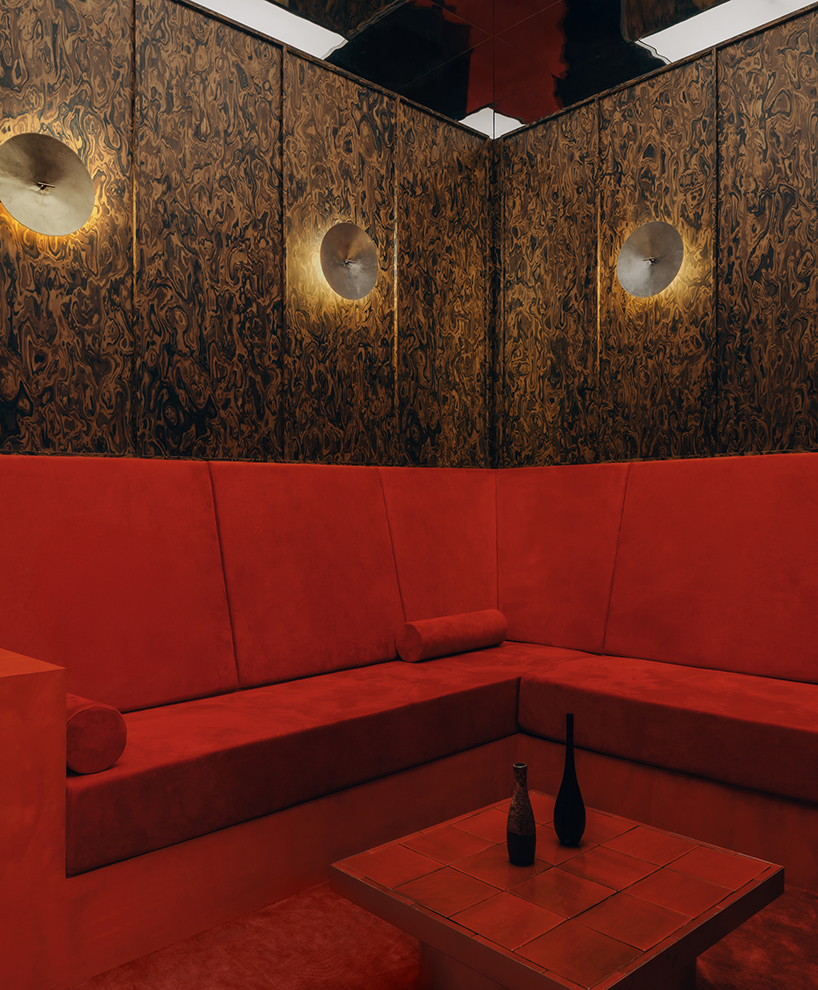
visitors are drawn either toward more expansive areas or into sheltered corners
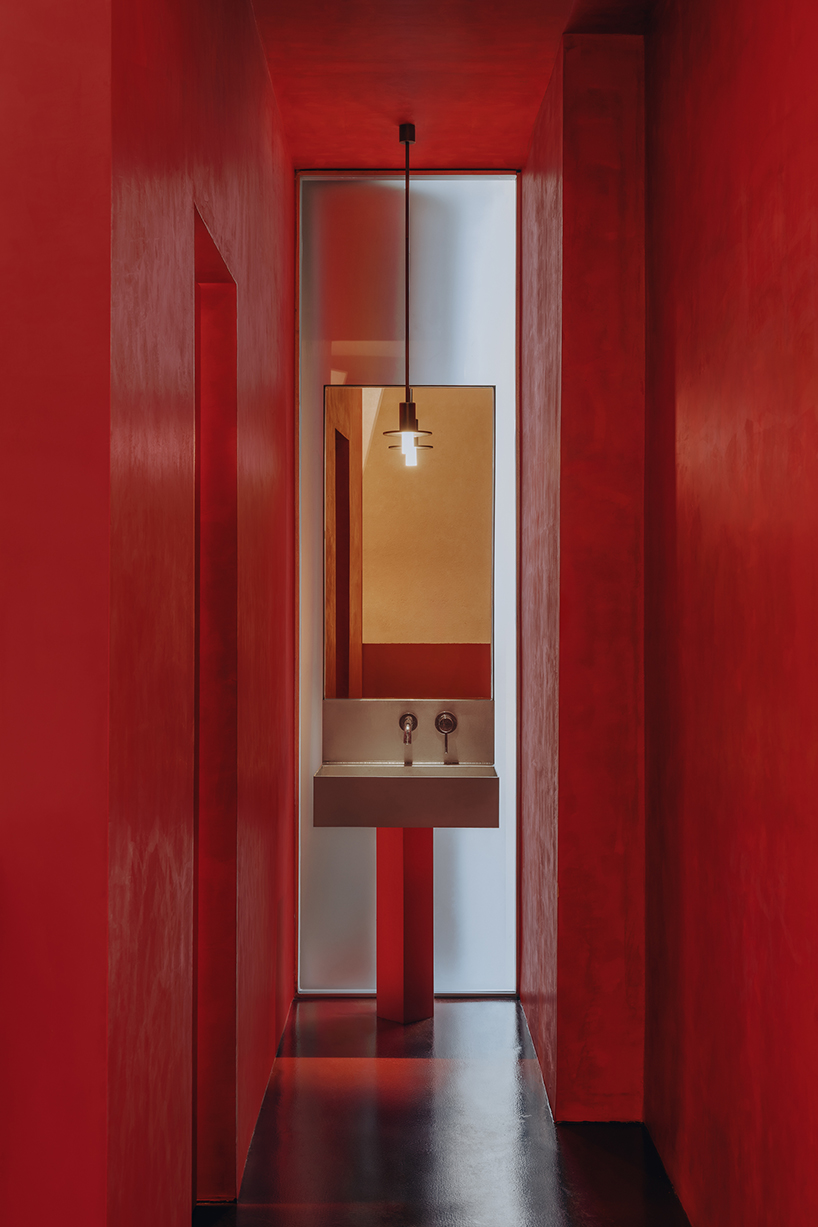
washing area tucked between red plastered walls
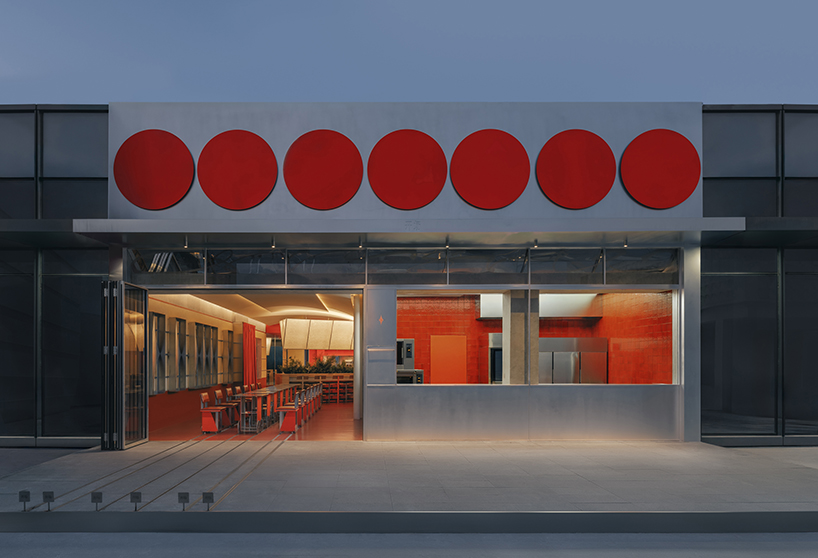
the rear facade opens fully toward an adjacent park lawn
project info:
name: Café On-Site
architect: aptdotapt
location: Zhejiang, China
photographer: Zhu Yumeng | @yumeng_zhu_coppakstudio
designboom has received this project from our DIY submissions feature, where we welcome our readers to submit their own work for publication. see more project submissions from our readers here.
edited by: thomai tsimpou | designboom
The post row of circular red panels lines the facade of café on-site by aptdotapt in china appeared first on designboom | architecture & design magazine.
Read the full article
Continue reading on designboom.com


